It’s the end of an odd-numbered week here at Ballymaloe which means it’s time for washing, tidying up, yoghurt making and general chores. And as I was at Probys yesterday morning, everything has to be done today. But nobody wants to read about such things, the experiments sound more interesting, no?
The exam at the end of last week might have been a worry, but it was relatively simple: the things we would be tested on were very clear and we were given plenty of time (and lots of encouragement) to try out the techniques that might come up as well as to identify the herbs and salad leaves. The practical exam in week 12 (there will also be two written exams) will be different: we have to propose—and then cook, of course—a three course menu. There are some boundary conditions most easily expressed as “choose but adapt, embellish and present well one of the Ballymaloe recipes from your course”—so no sautéd kangaroo, for example…
I’m thinking along the lines of adapting Ballymaloe recipes to include ingredients that I could find around Valréas. A first idea was to make a pâté saying that I could source the pork from Ferme St Martin in Grillon but we have a 3 hr time limit to the exam so that wouldn’t really fly: you can make things in advance but the time you take counts against the time limit and if you’re working on something in advance you can’t be working on things in parallel. So my current thinking for a starter is a soufflé a) with Nyons olives and b) using a Nyons olive oil for the roux rather than butter. My thinking was that this should be possible—swap one fat for another—but you don’t want to be trying things out during the exam. Hence the experimenting!
Online research is annoying as there are recipes for oil based roux but those I find with my simple search technique mostly discuss gumbo roux and even those that don’t use volume measurements. Were I world president there would be a law against that for dry ingredients—and probably also for liquids too; no more worrying whether your tea/dessert/tablespoon is the standard size. Anyway, digression over, the most sensible thing I read is a comment that you need to take into account that butter is not simply a fat, but also has some water content. Even this isn’t vastly helpful, though, so I decide to go with a straight weight-for-weight replacement to my standard 50g butter & 50g flour to 500g milk for a thick bechamel. This looks a little thin when the flour has been mixed in, though, so I add another 20g and the roux looks about right.
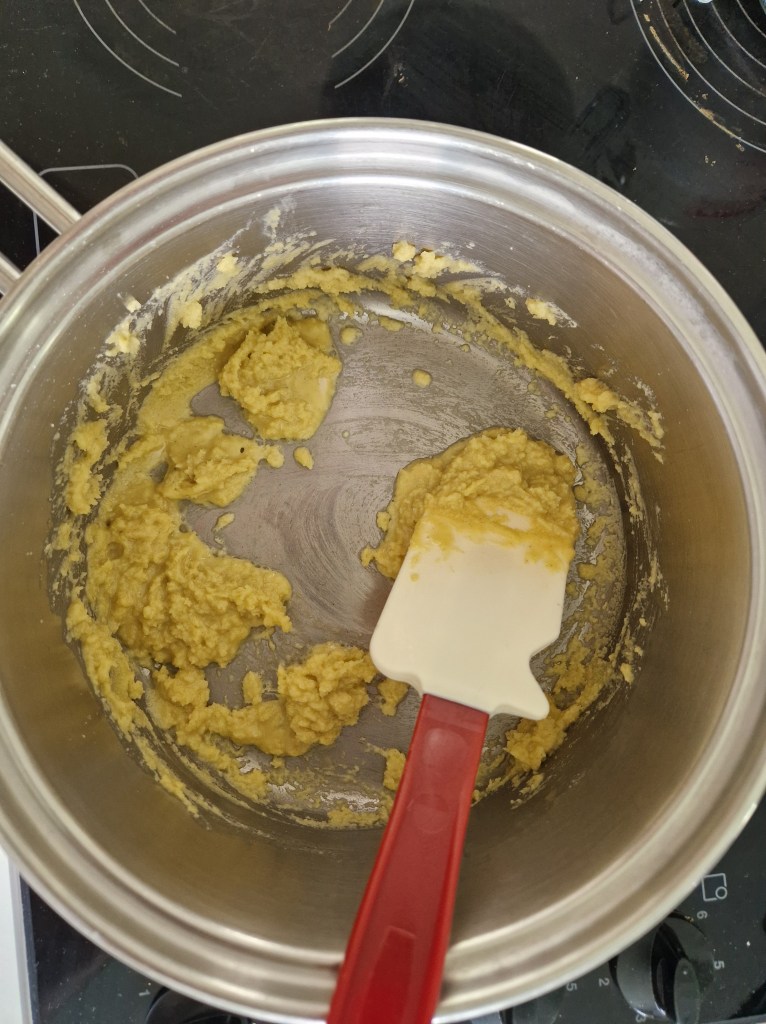
I’m happier still when the bechamel has thickened…
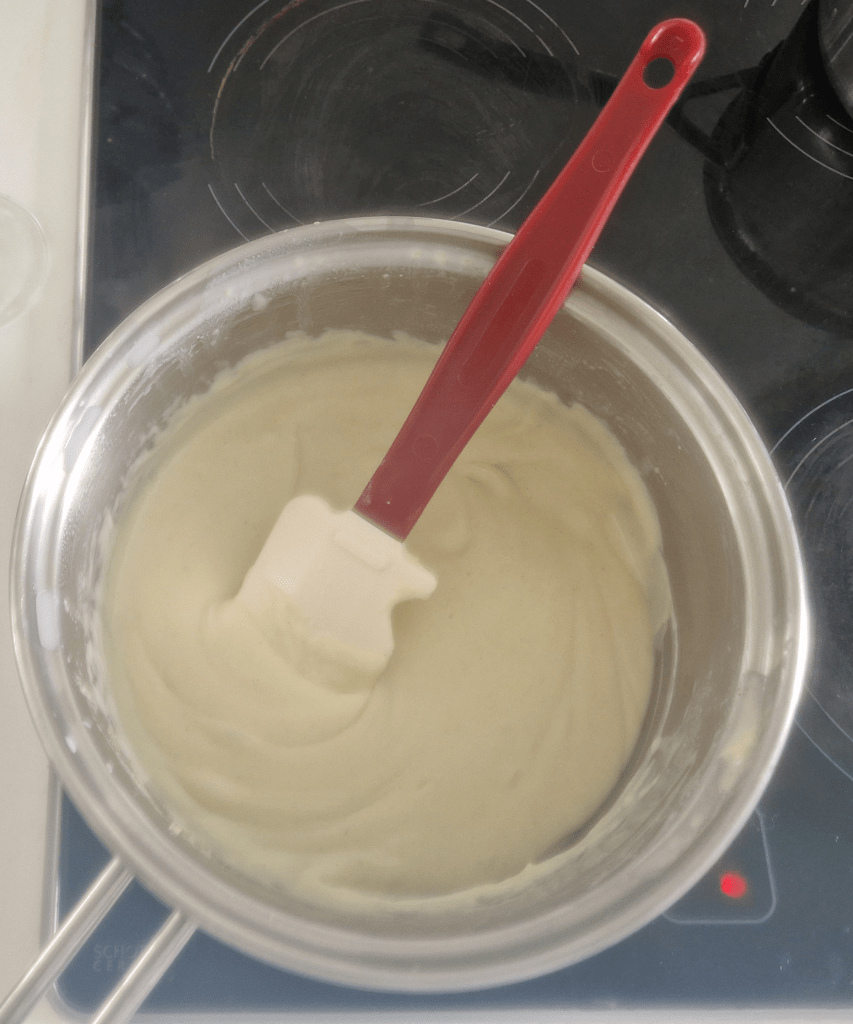
… confident but a bit worried part way through cooking the soufflés…
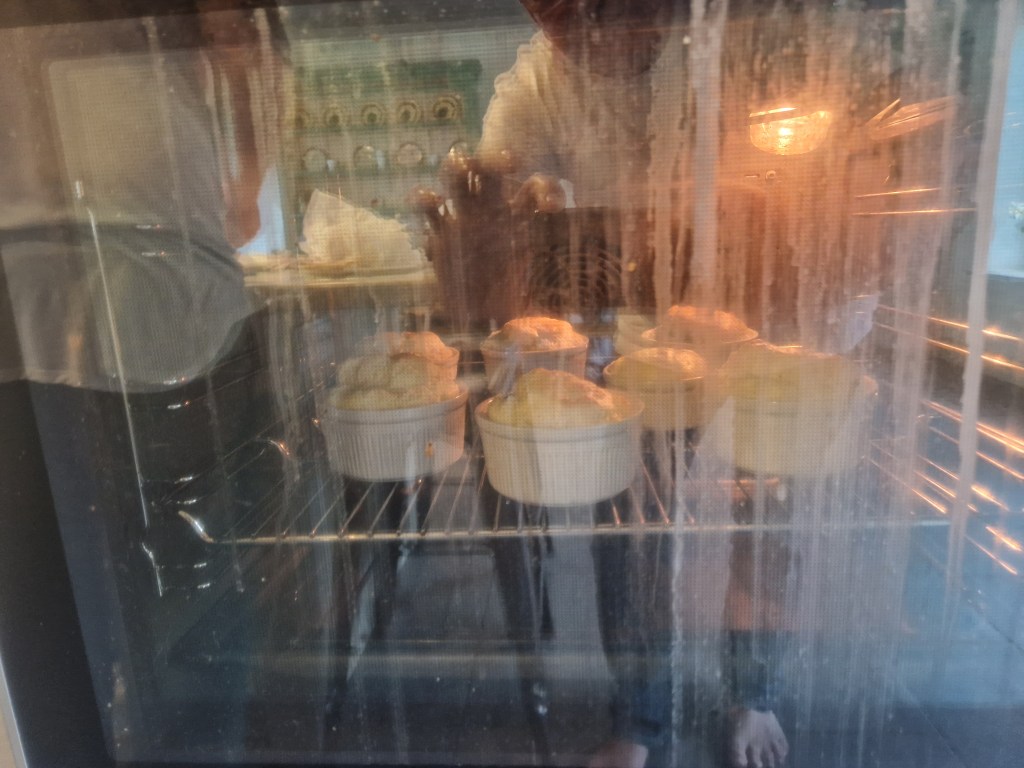
… and very happy when they come out!
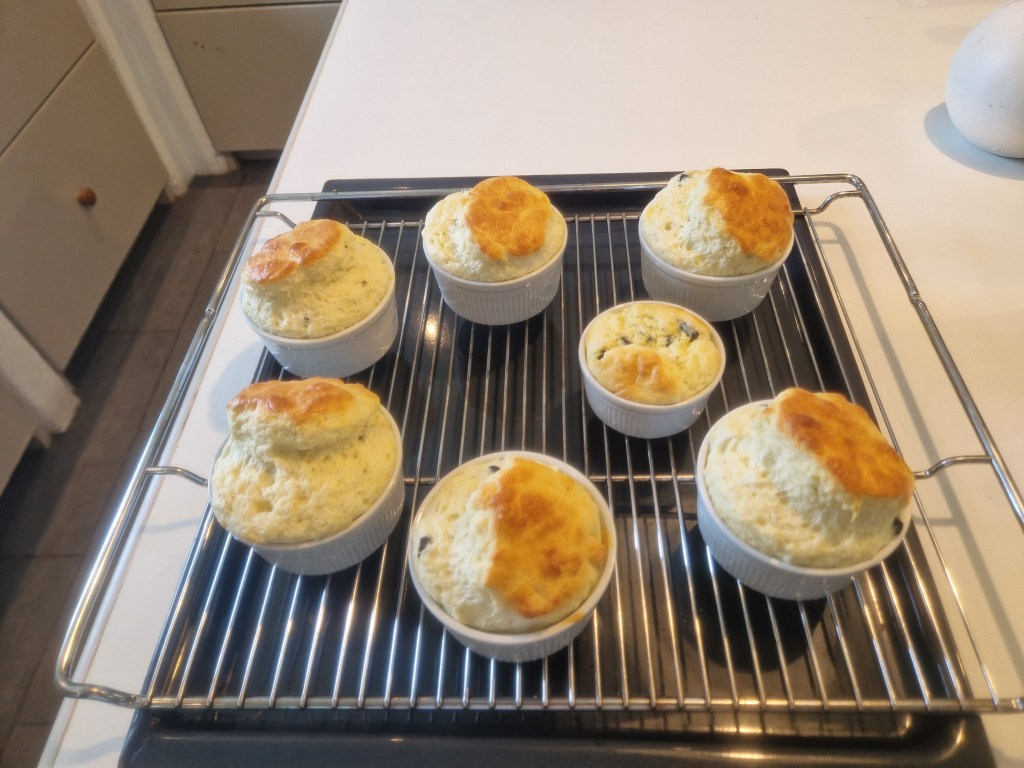
They just need a flavoursome oil for the roux and decent olives. A task for J…
As for the main course, I first thought of pigeon (again, there’s a local supplier near Valréas) but I doubt that features on the Ballymaloe recipe list. Pintade (Guinea Fowl) does, but it seems to be almost impossible to buy in Ireland. Certainly not in Midleton. I had hoped to be able to buy one at the English Market in Cork yesterday but even there you have to order two weeks in advance! I’ll have to see for Ballymaloe but even assuming I can, do I just serve the suprême or try to do something with the leg or thigh? So the other experiment today is to confit some chicken thighs.
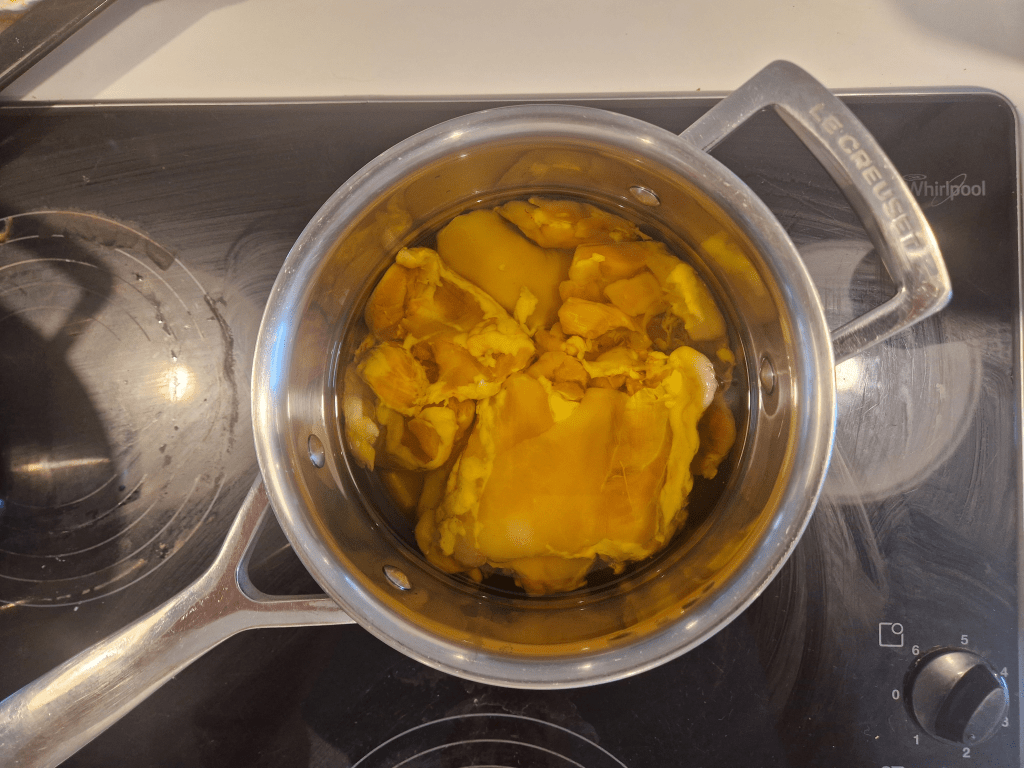
They’re pretty soft after 90 minutes in oil at around 100°C so I’d probably be OK with pintade thighs as well. I doubt it’s absolutely necessary but if I serve the suprême with olive oil mashed potato and a seasonable veg (baby carrots?), some crunchy texture would be good and confit thigh with filo pastry seems the way to go. More thought needed! Pommes dauphine would have texture and tick a “can make choux” box but a) I’ve ticked that box and b) KISS seems a good approach to an exam!
Cooking wasn’t over for the day, though, as I’d agreed to show a fellow Pennywort dweller how to make cannelés. SB is following the course as she might be interested in adding a café section to a gift shop she runs with her husband. As the batter keeps for 2-3 days (and improves with keeping for the first couple) they seem a good thing to have on the menu: if they’re selling well you can bake a batch from pre-prepared batter, if not you just keep that for the next day. Better still, from SB’s point of view, the ingredients don’t cost that much and she reckons they could be sold for €4.
As promised, the batter really doesn’t take that long to make, less than half an hour. As usual, the real test will be in the eating—on Tuesday evening.


Leave a Reply