… well, not really. They sell raw milk from the cows in the farm shop so hygiene considerations likely mean we can’t take any active part in the process but watching it all happen this morning was really interesting. The dairy is really small but there’s only around 10 cows to milk on any given day—they try to spread out the calving to keep an even volume of milk throughout the year; some commercial farms will try to produce a greater volume of milk in the spring for making better cheese when the cows have been let out to feed on the new grass.
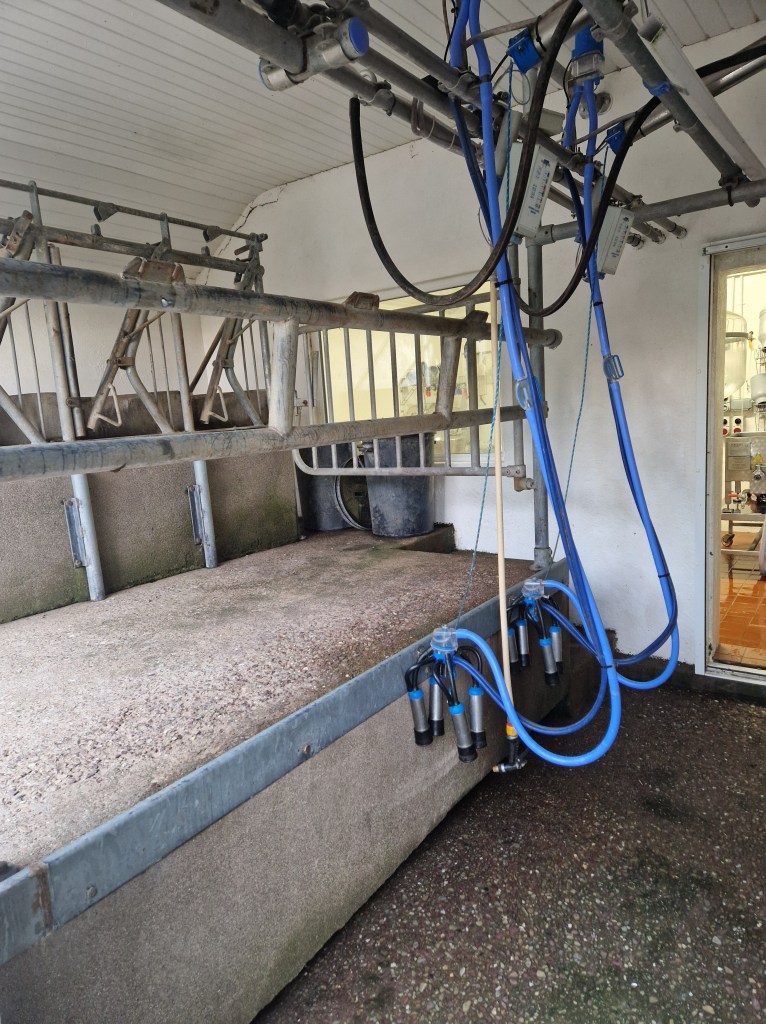
The cows are milked just once a day so they are usually ready and waiting to be taken to the parlour.
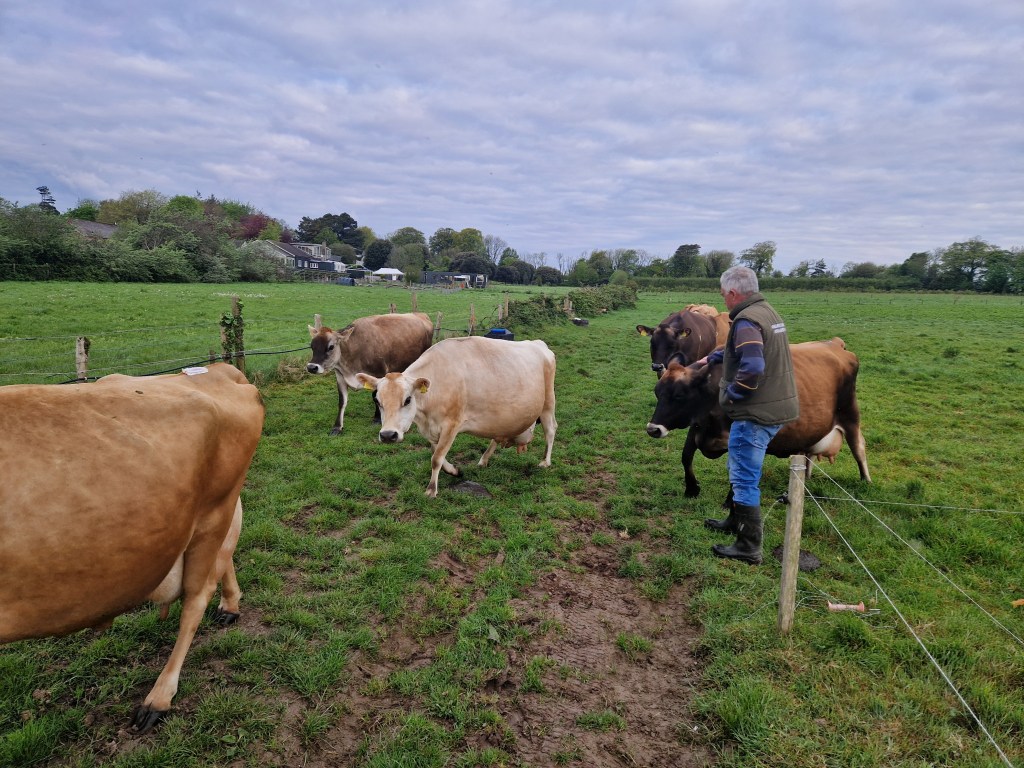
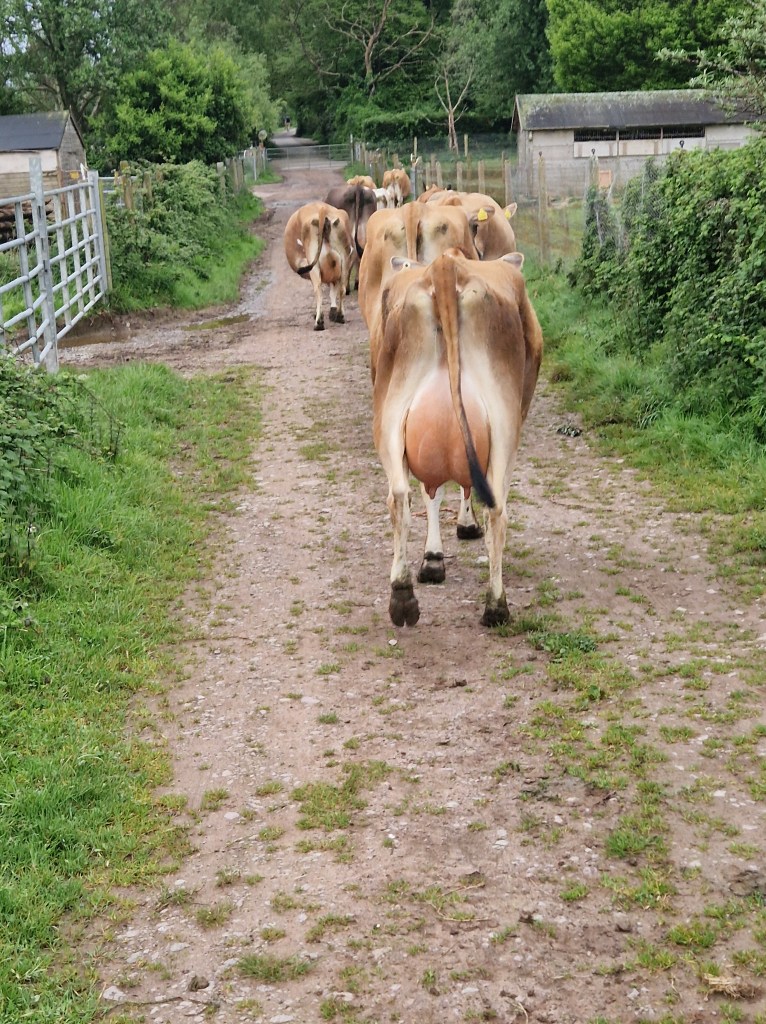
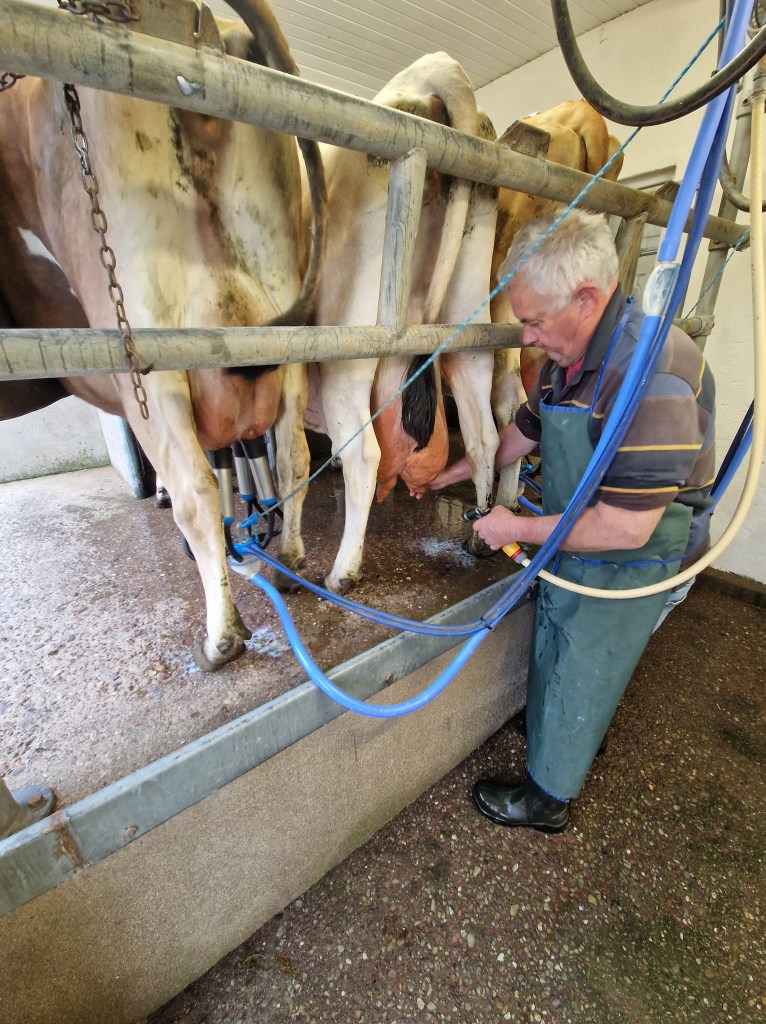
If you look at the front cow on the first picture, you can see she has a little tag on her back. Cows will mount each other when they are in heat and this will cause a gel pouch in the tag to burst turning it red, the signal to call the specialist for artificial insemination; the herd is too small to justify a bull and keeping these has risks! And I was told that Jersey bulls are on the more difficult end of the scale…
There’s a definite “milking order” but that doesn’t mean the cows queue up nicely; those lower down the order can make it hard for those higher up to get into the stalls; they’re all keen for the food in the trough!
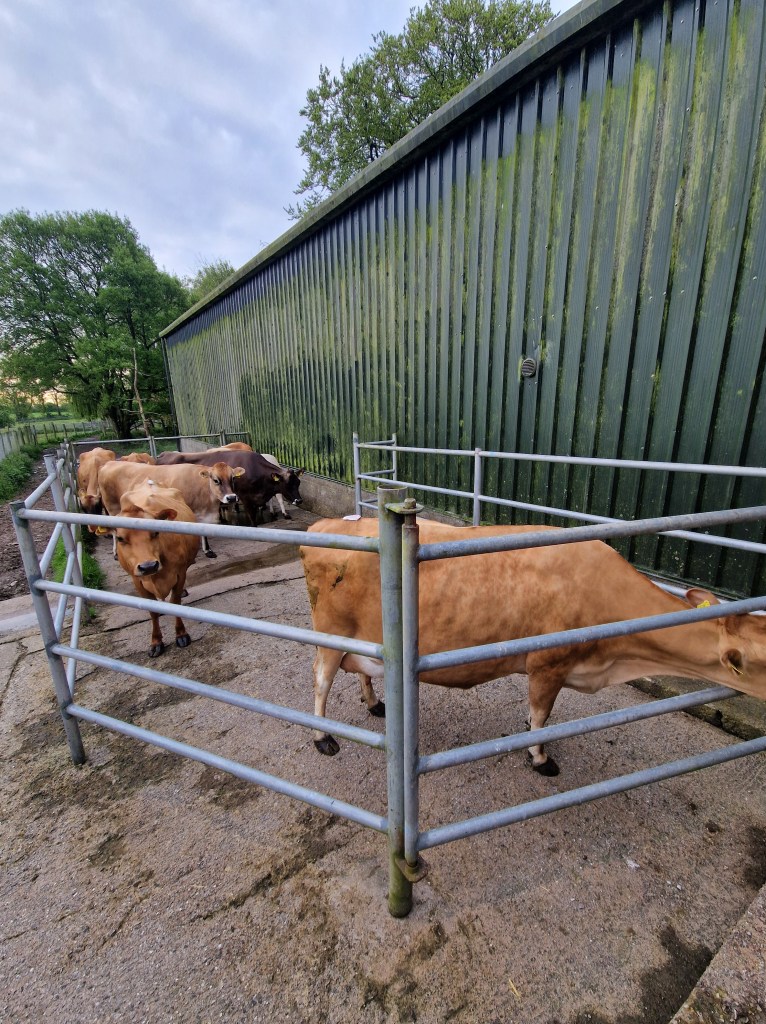
Once safely in the parlour, their teats are washed and disinfected then a little bit of milk is squeezed out manually to check the cows for mastitis. The cows are then hooked up and the milk starts to flow.
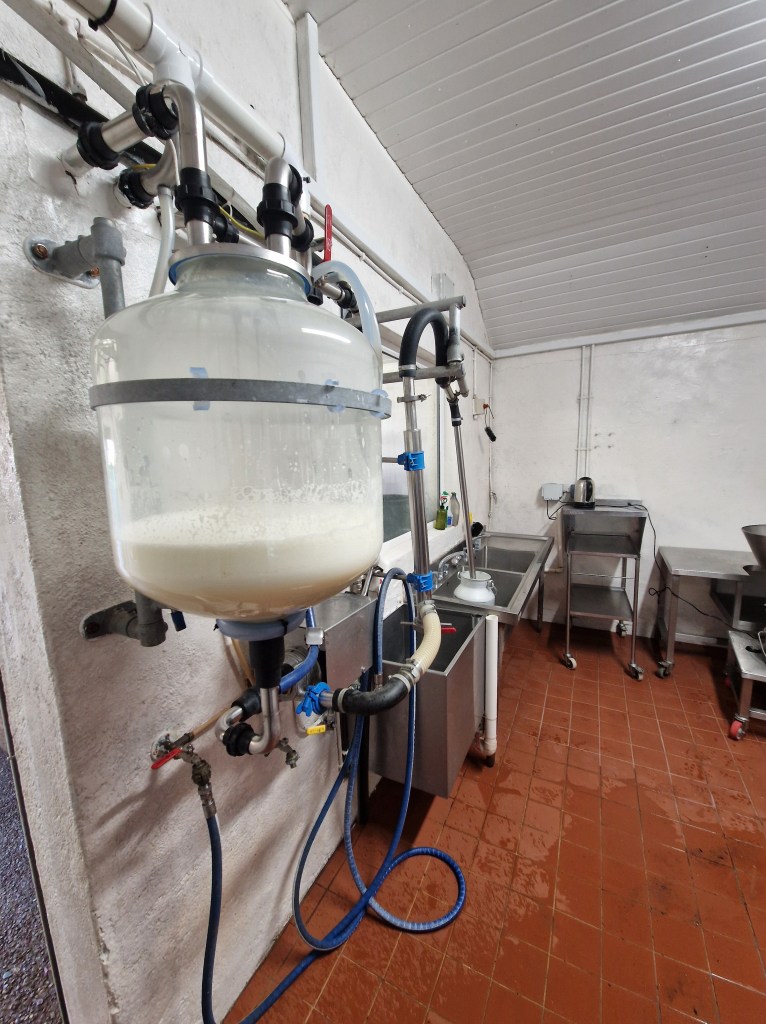
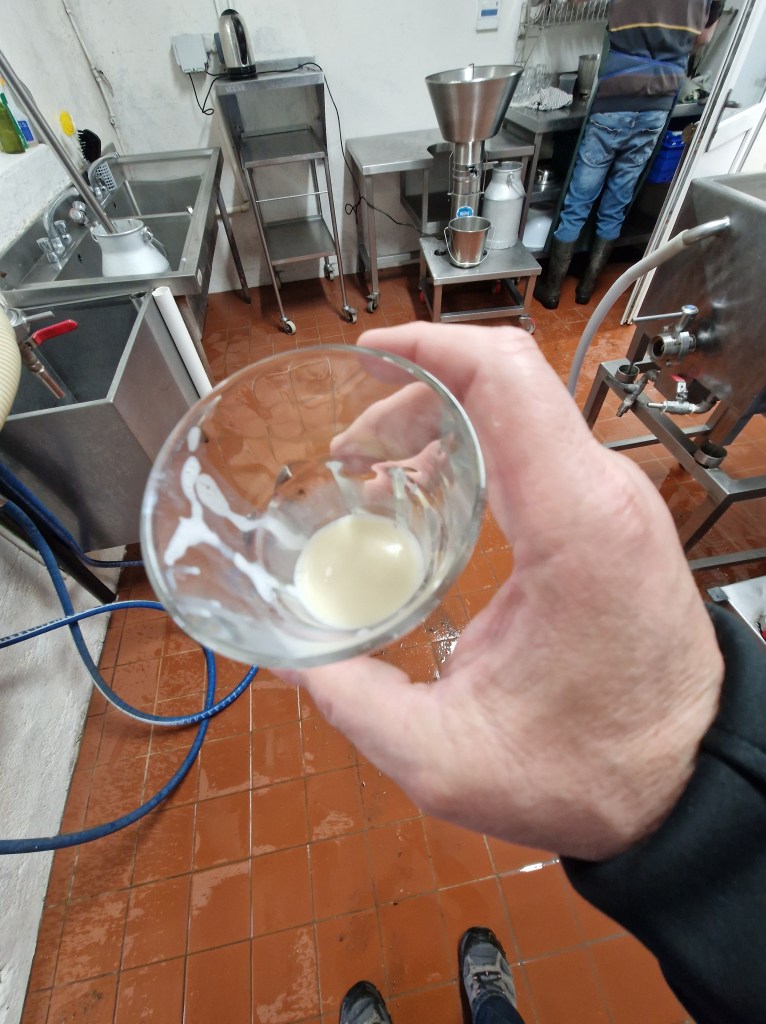
After collecting a churn of raw whole milk for the shop (and a drop for the spectator), the rest is passed through a separator…
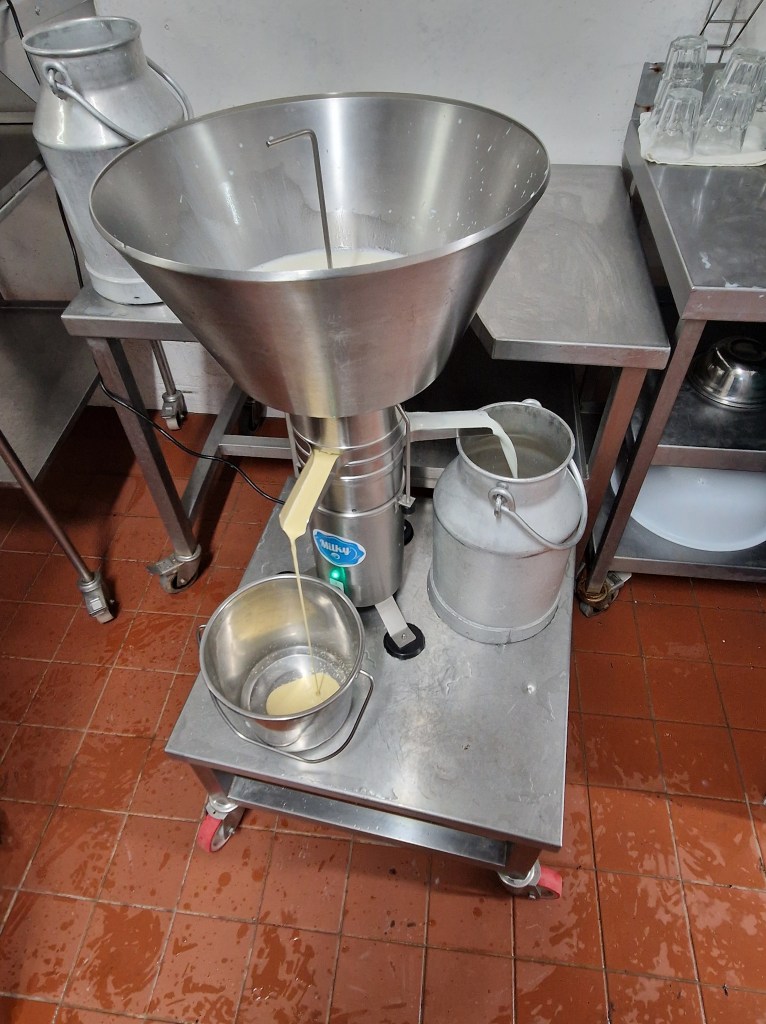
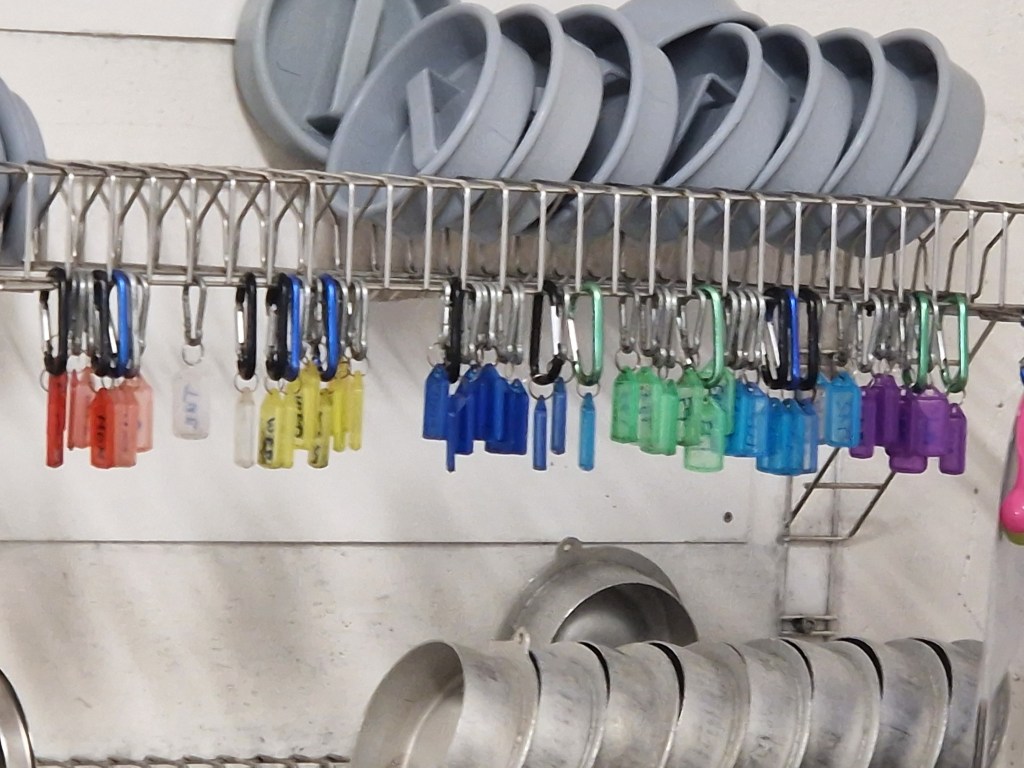
… and the milk churns are given a tag to show the daily production. The milk is used fast enough that daily tags are all that is needed. Cream churns, though, are dated.
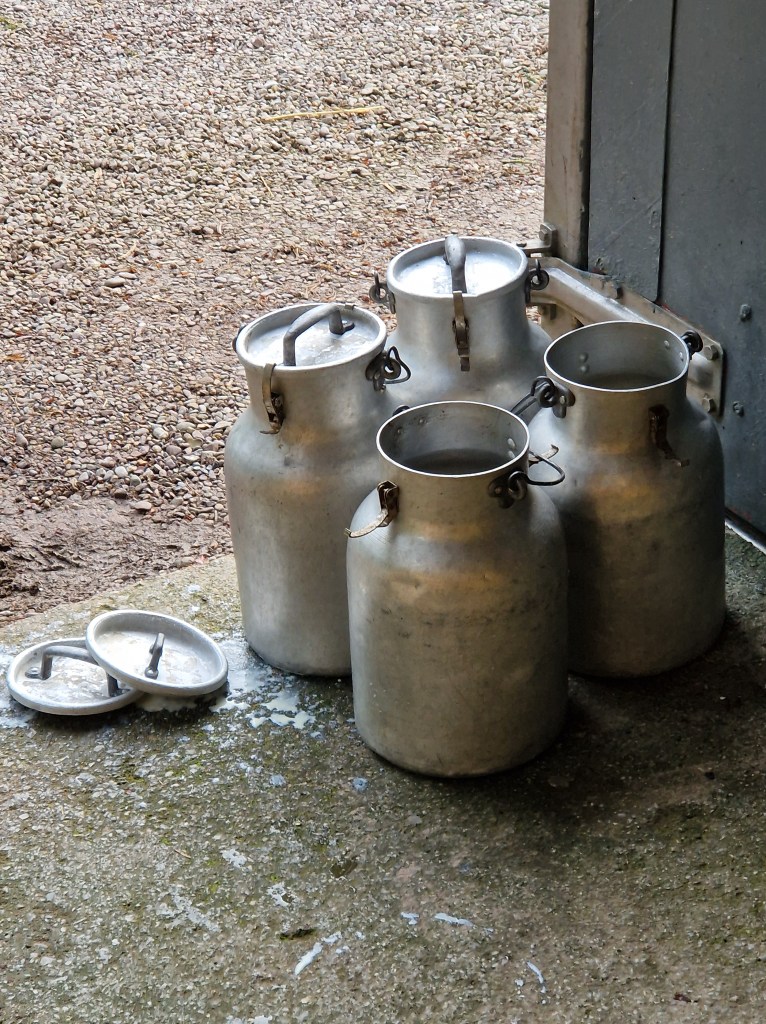
Some whole milk is also kept for the calves…
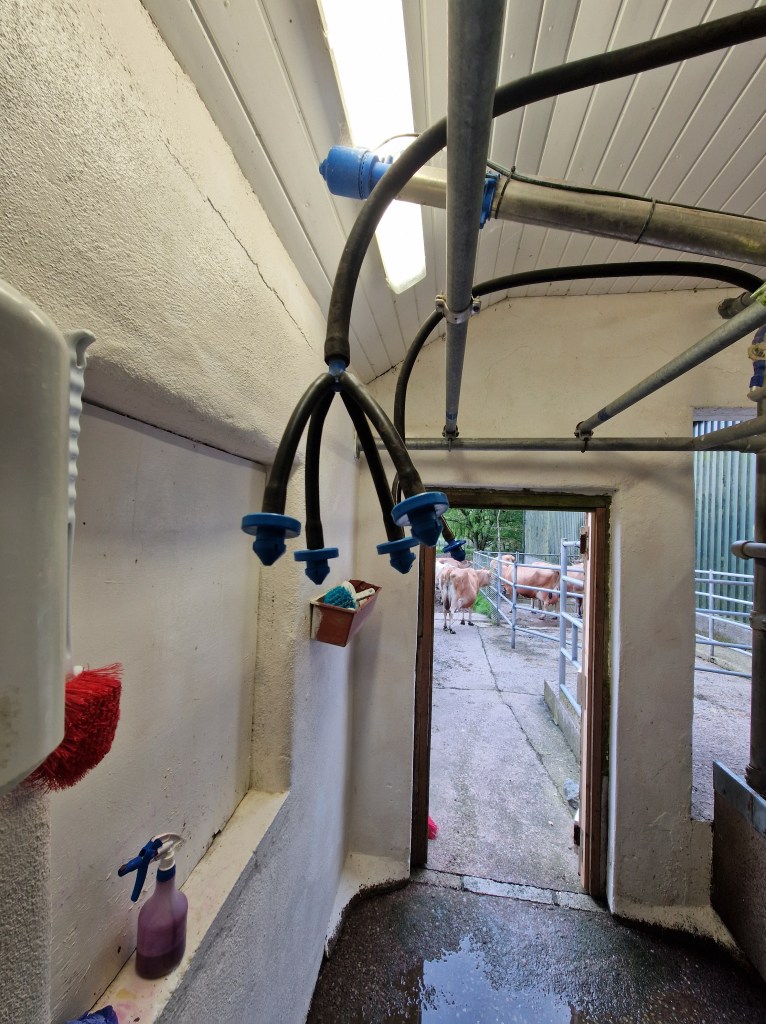
… and then it’s time for cleaning. Dedicated plugs are put into the milking head and then water and various cleaning fluids are run through before everything is rinsed out ready for the next day.
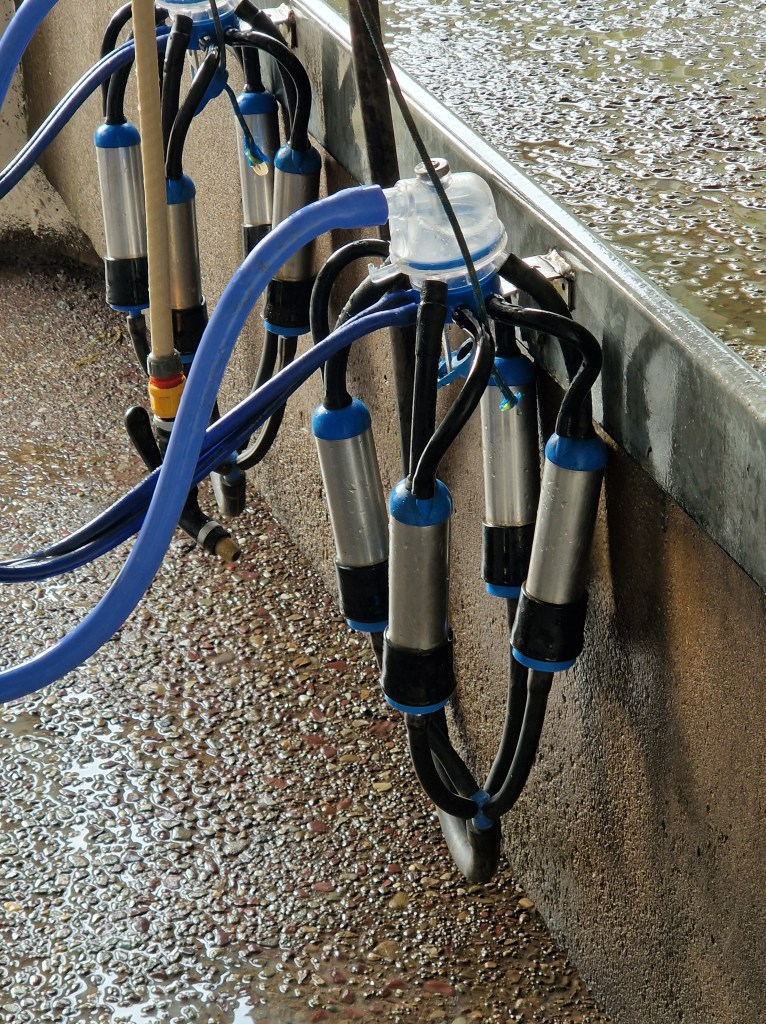
There’s also a disposable filter in the circuit which is checked carefully. This one was healthily clean.
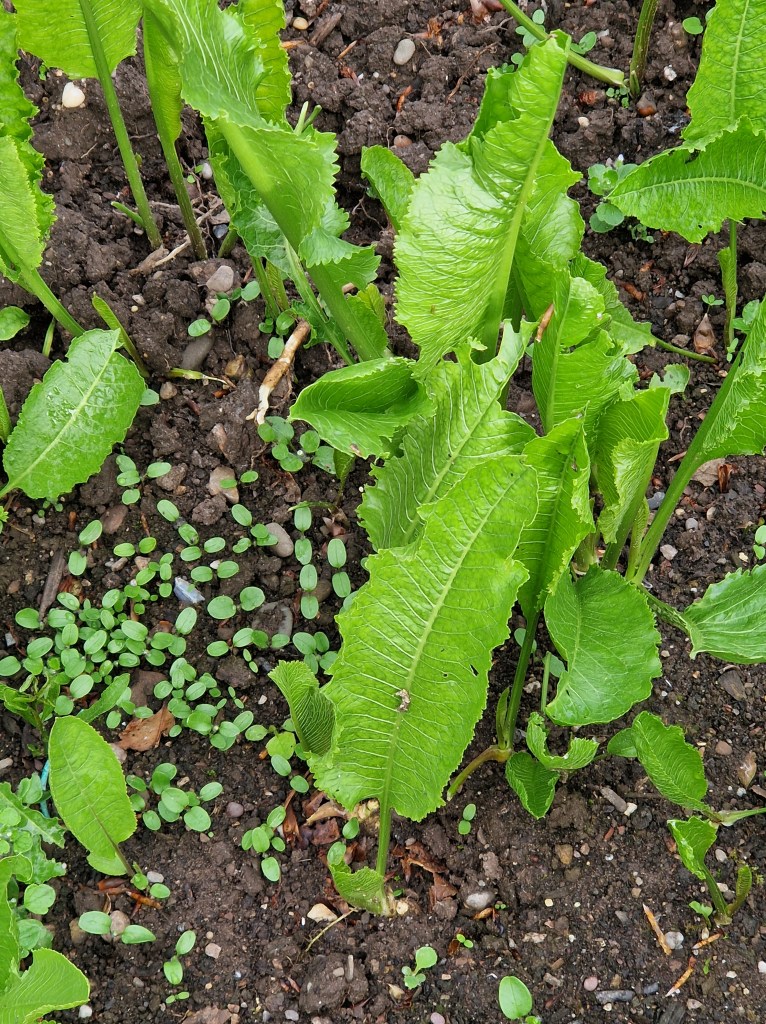
Then on to today’s lectures which start with a trip to the herb garden to collect horseradish. We are shown the leaves, but I’m not sure I’d be confident in recognising it in the wild, even so!
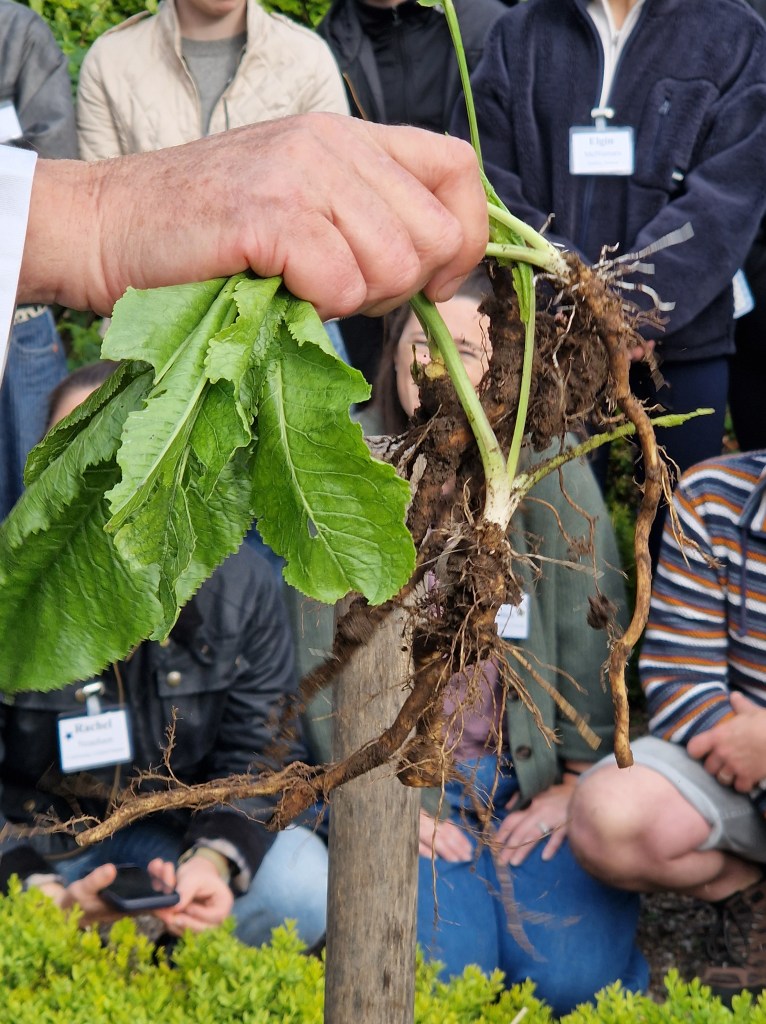
The roots, though, proved to be pretty small (and I think I spotted a larger one being grated later in class for our horseradish sauce).
The horseradish is being collected as roast beef is on the menu today. So after a brief digression on various biscuits, Rory stresses the importance of buying good quality beef—grass fed and dry aged. Naturally there’s yorkshire puddings, roast potatoes and (curried) roast parsnips on the menu as well plus freshly made English mustard and anchoiade as accompaniments as well as the horseradish sauce.
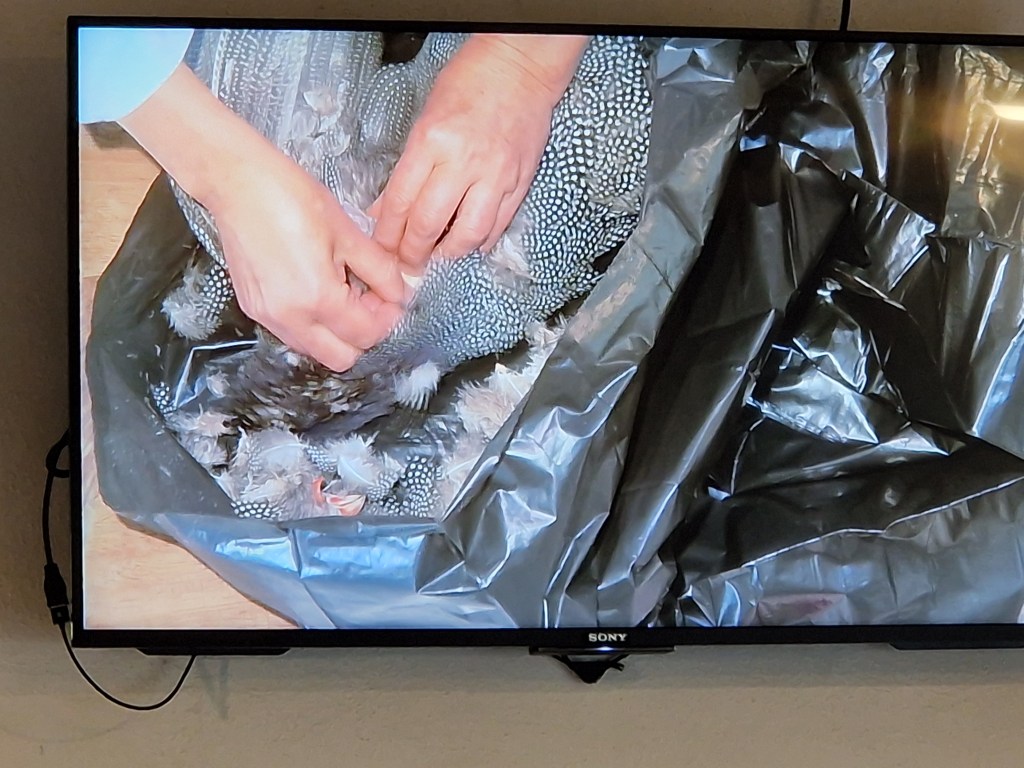
Rory also cooks lamb shanks and cassoulet as well as demonstrating how to pluck and gut a guinea fowl:
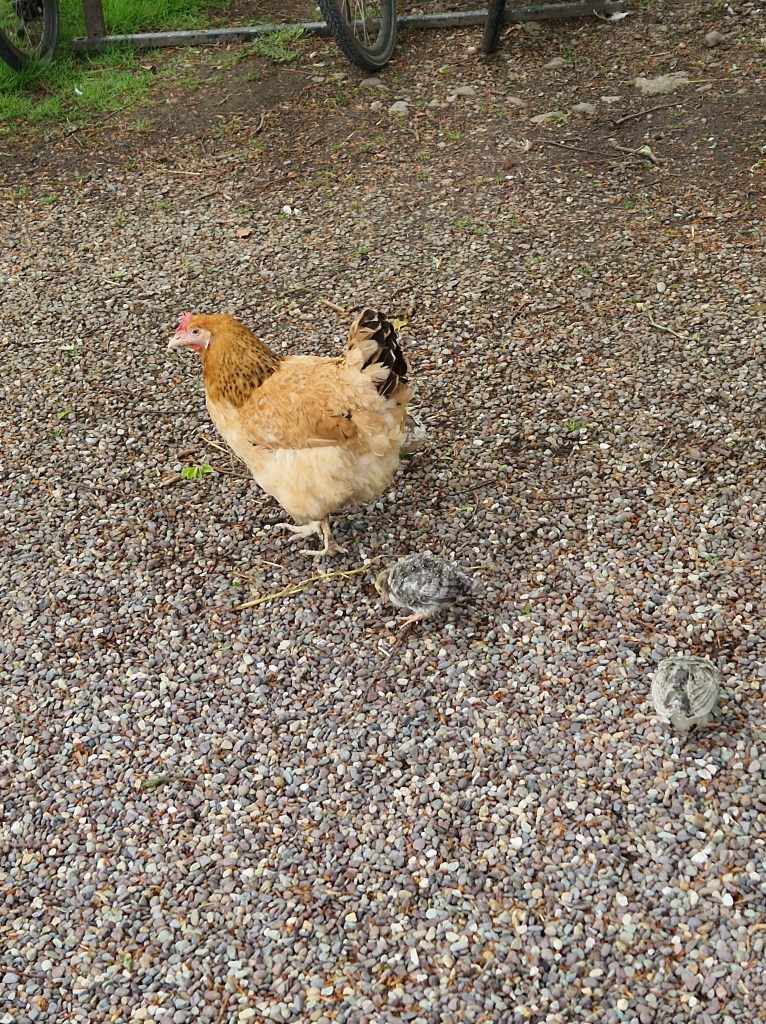
On a happier poultry note, the farm hens were released from their bird-flu enforced internment yesterday so there are many hens everywhere around the school. Some with attendant chicks:
After a copious lunch (I was on serving duty and being served last is no punishment!), Rory showed us samples of well over 30 edible plants that can be found around the farm then took us round the gardens to see them in situ. But being edible, Rory emphasised, doesn’t mean they have great gastronomic quality. They won’t kill you but you’re not going to be craving most of them either—elderflower being an exception. Many small flowers, though, look attractive as decorations. [I’m reminded nevertheless of Chef Pol at Gastronomicom who reckoned such decorations were mostly wasted, spending just a brief time looking attractive on a plate before being transferred to the waste bin as most diners wouldn’t eat them.]
Back to the demo room for a presentation of the Ballymaloe process for making sourdough loaves. Cooked in a dutch oven but, most importantly, stressing that you don’t need to feed sourdough religiously, it can be kept in the fridge and brought to life with a feed the day before you want to start a loaf (so 3 days before you want to eat one…).
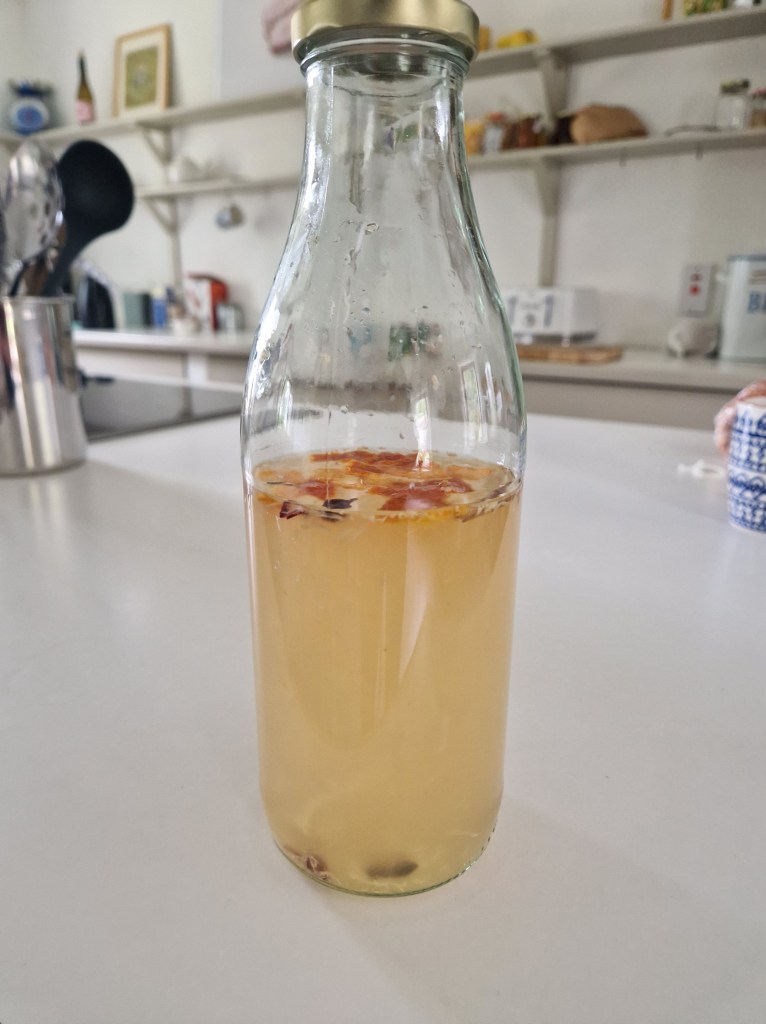
And then on to Fermentation HQ to check up on my kefir—actually “our kefir” as I now have a partner (so halving my production. Sniff.).
Then homework, blog and bed.


Leave a Reply