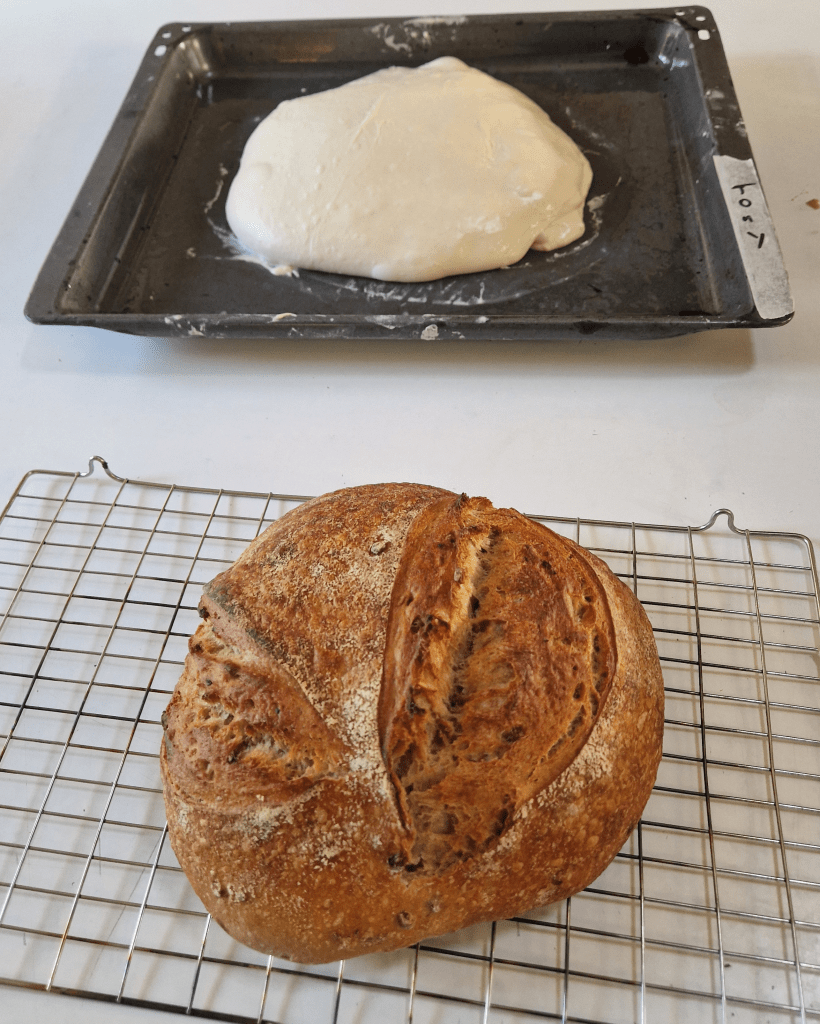
… but, as is not unusual, at the end of a day doing other things. The first of those was starting a focaccia. This is a very hydrated dough but I managed OK with damp hands and at the end of the 3 hours of stretching and folding it looked OK to me; we’ll see tomorrow when I get to bake it. The stretching and folding is also rather weird: you pick up the dough in the middle so all of it comes of the tray it sits on, shake it around a little to strengthen the gluten, then put it back so the middle is folded over the ends—but rotating 90° so that next time you pick it up it stretches the other way. It’s easier than I make it sound!
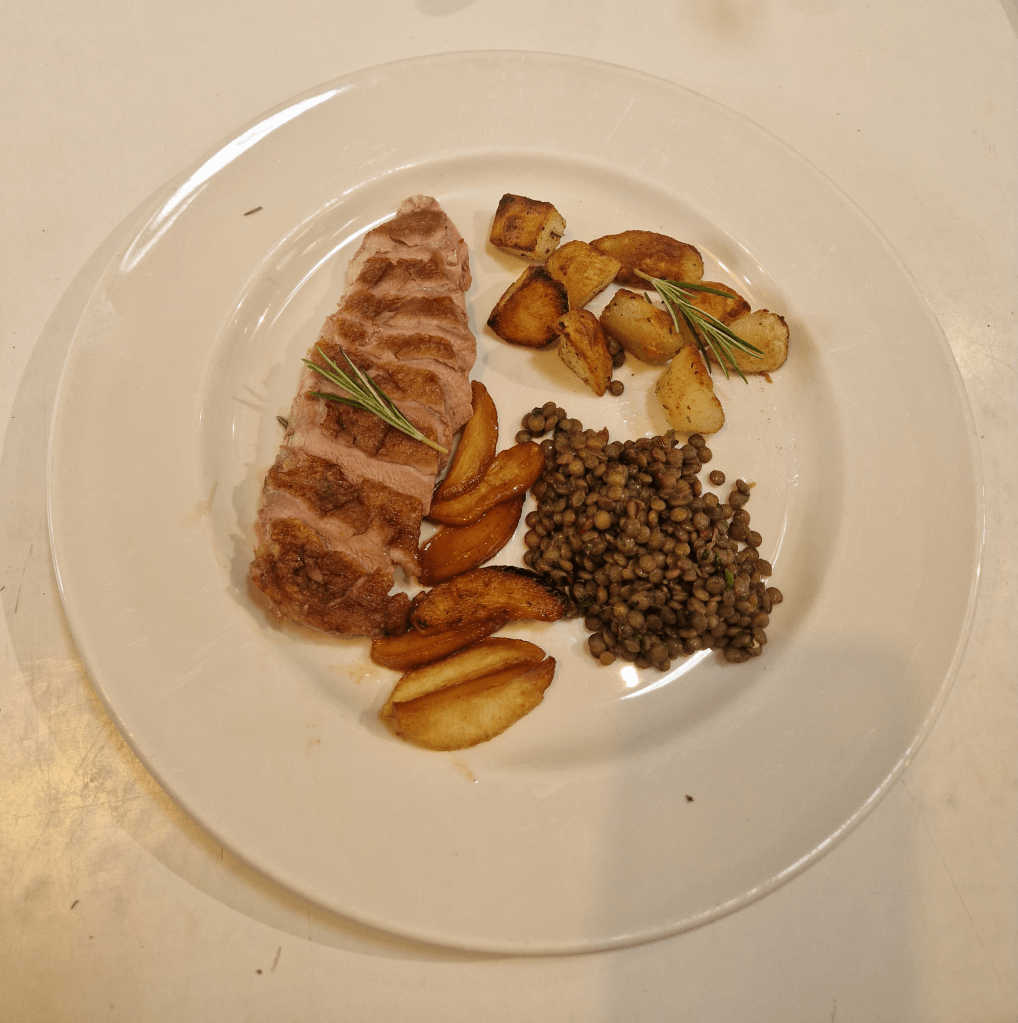
Then, the morning in the kitchen was as busy as I expected—early on I had two kenwood mixers on the go and two batches of caramel cooking on the hob—but it all came together in the end. The ice cream didn’t set, though, so I won’t know how well I actually made the caramel until tomorrow. The other problem is the Aylesbury ducks. Apparently they are bred to have a good balance of flesh between the breasts and the legs but as far as I’m concerned they have measly breasts with not much fat compared to the ones we can get in France. I guess this is my way of justifying the fact that I cooked the breasts too long on the skin side… But the duck, lentils, potatoes and caramelised apples made for a very satisfying lunch.
There was a bit of a surprise at the beginning of the demo session as we had the draw for our exam times and the kitchen stations we’ll be using—we’d all handed in our menus and ingredient lists before assembly this morning. My exam will be at 8:30 on the first day, Wednesday and I’m happy with the section I’ll be using in kitchen 1. As, to general surprise, the exams can start at 7:30, I’m lucky with my 8:30 start as I’ll be able to bake the focaccia accompaniment that day. It wouldn’t have been as good if I’d have had to bake it on the Tuesday.
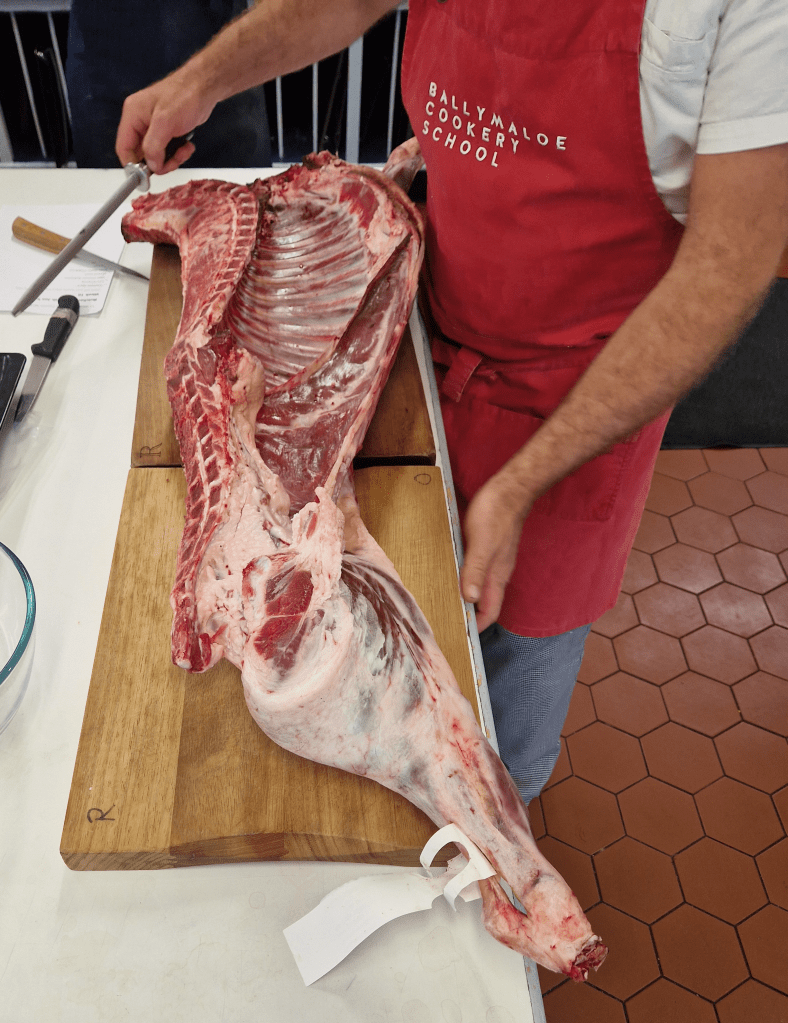
So, on to butchery… These classes have been running throughout the course but I just happen to have been scheduled for the last one. We learn the different parts of a half lamb to better understand where meat cuts come from (naturally, there’ll be questions related to this in our exam…); Leo, our teacher, emphasises that the basic structure of pig and beef carcasses is essentially the same so if you can butcher a lamb carcass you should in principle be able to tackle pork or beef.
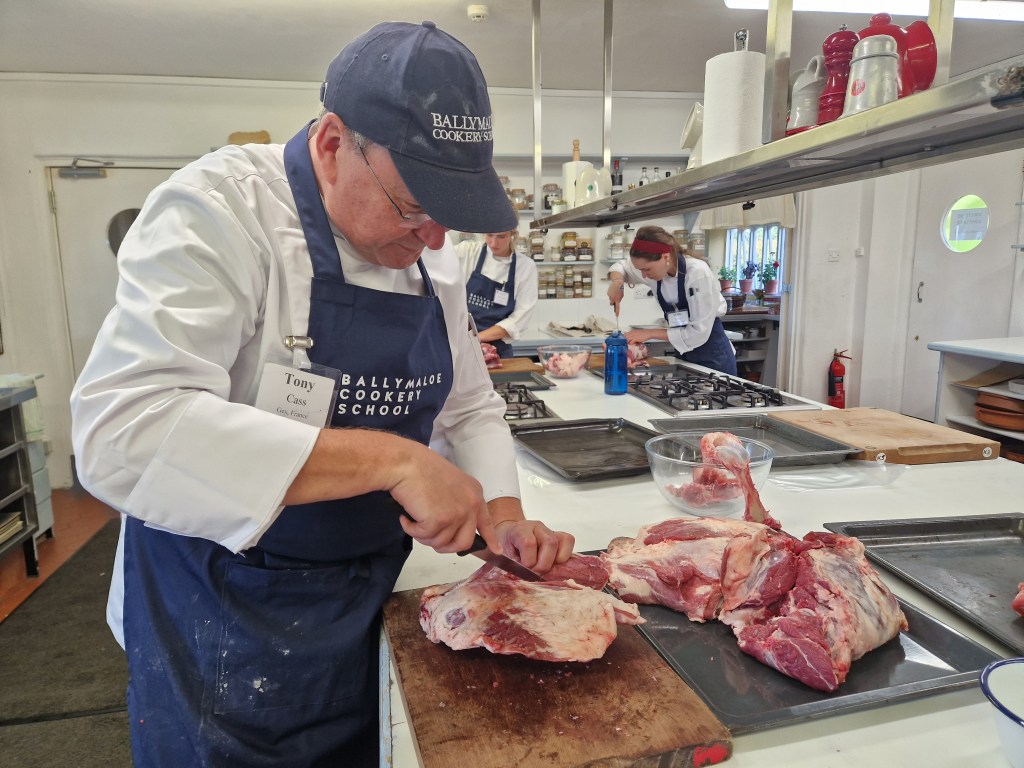
After Leo has broken the carcass down to the major portions (shank, neck, shoulder, rack loin, belly, leg), and demonstrated boning the leg and the shoulder it’s over to us with legs and shoulders prepared earlier. As some students aren’t keen on this, I bone out both a leg and a shoulder. I’m not sure, though, that I’ll be doing much of this in future!
Tomorrow should be easier… And, talking of tomorrow, J. arrives for the weekend so updates are likely to be delayed.


Leave a Reply