Simple: control your costs and make sure you sell profitable items. Well, maybe not quite that simple as we had another full day devoted to “the business of food”.
But first, although it had rained heavily overnight and drizzle was in the air, it wasn’t actually raining so I went along for the garden tour. One of three hardy souls (although three others joined later claiming they hadn’t been told the right time…) Tim pointed out the apples developing on the tree by the school; June is apparently when you can start to make an assessment of how your autumn crop will look—and the time to thin out clusters if too many are growing together. Then we took our usual route through the herb garden, past the currant bushes and raspberry canes and then via the vegetable plots to the glasshouses. I haven’t been taking a regular sequence of pictures, but the currants are developing well and now have protective netting to keep the birds away. The raspberries, though, are autumn cropping ones so the new canes are just developing. For historical reasons, a patch right by the raspberries is home to a field of artichokes.

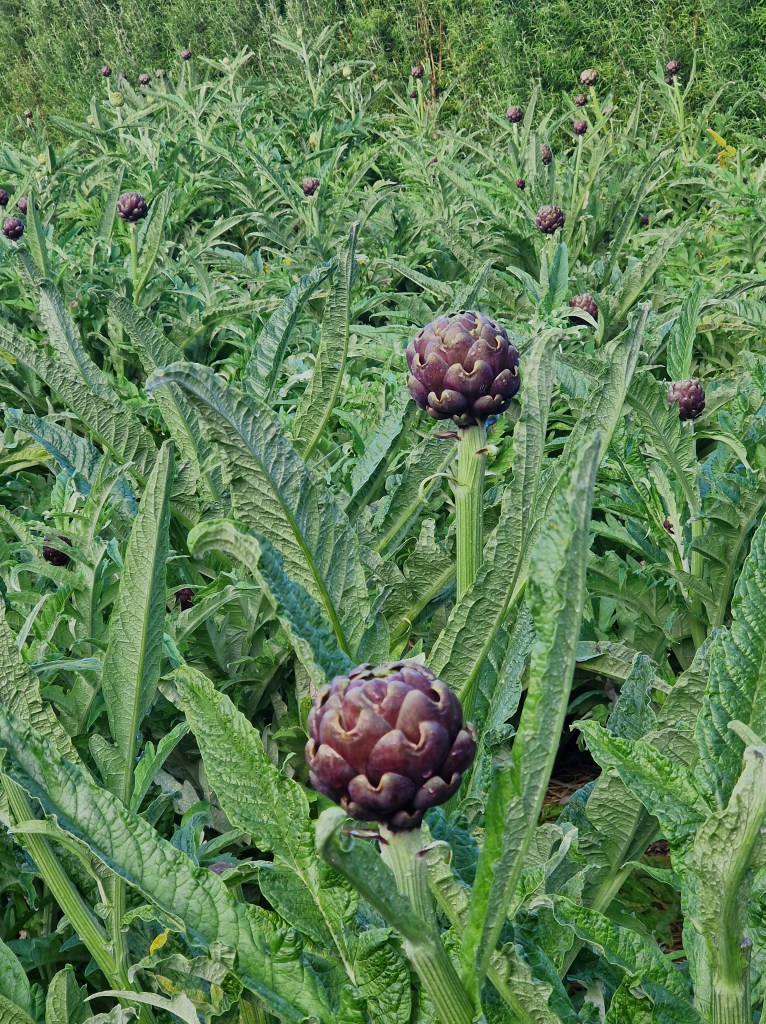
These are “british” globe artichokes and so need to grow to a reasonable size and then be boiled so you can leave rabbit-tooth marks as you eat the base of the leaves; you can’t make a barigoule from the small ones, sadly.
I don’t have a picture of the student cornfield in the glasshouse as I needed to see Maria at Fermentation HQ about my kombucha—it’s been two weeks exactly since I started with my first batch. I found it a little sweet when I tasted it so there was an option to leave it for another few days. The SCOBY I started off with, though, was pretty small and hadn’t been active for a while. As Maria explained that it can take a couple of batches before a SCOBY gets into its rhythm I figured it would be better to start brewing another batch.
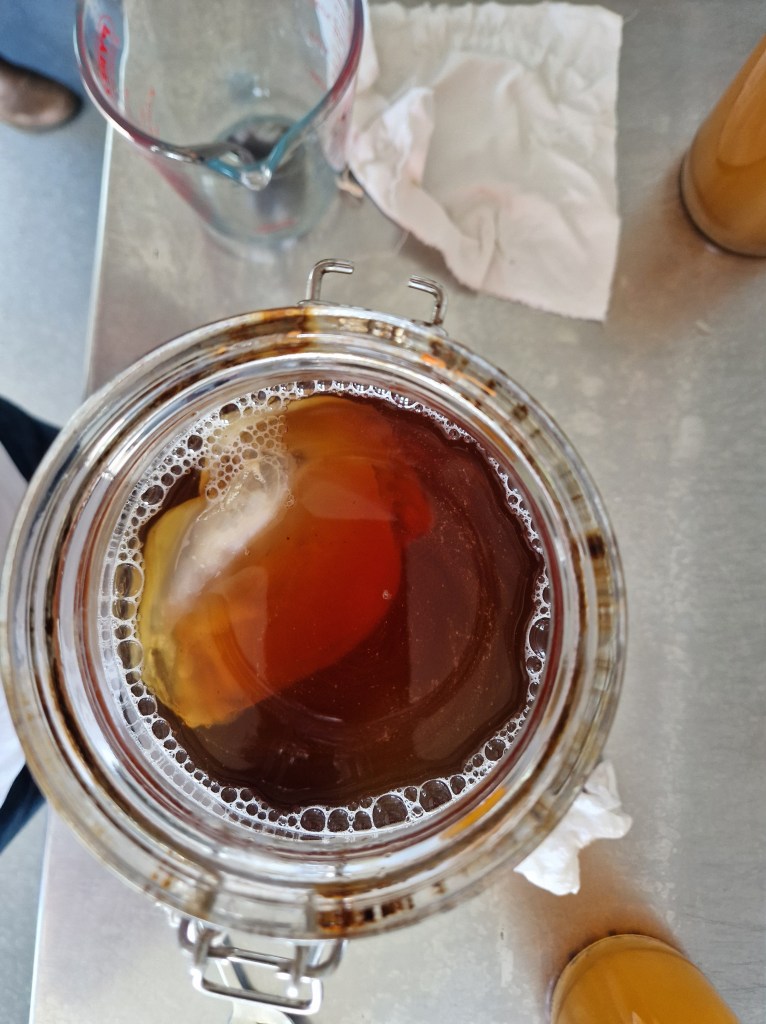
And I have, of course, just under 2l of kombucha to drink, half plain and half with a mix of coriander, cumin and fennel seeds which Maria said would be “interesting”. We’ll see!
Then it was time for the business lecture… We started with a discussion of the good and bad points of chains. Not all are the size of MacDonalds; a chain can have as few as 2 or 3 outlets. One good thing about chains is their consistency and the systems they have to ensure this. Which led to Blathnaid pointing out that restaurant owners must have clear, repeatable recipes with precise lists of ingredients (and preferably with a photograph of the plated result); if they don’t they will have a problem if (or rather when!) the staff who know how vague recipes are translated into customer favourites leave.
The other essential reason to have recipes with precise lists of ingredients is so that they can be costed accurately—along with the accompaniments (such as cream for a desert). Once a recipe has been costed you can figure out how much you need to sell it for based on a) the margin you need and b) VAT. Not taking the latter into account has led to the failure of many businesses, apparently!
As for margin, Blathnaid repeated the rules of thumb from last time that for “normal” establishments (i.e. not fine dining ones), 25% of the pre-VAT price covers direct food costs, 32% labour costs and 24% overheads (utilities, rent, …) leaving 19% for profit. Pre-tax profit, but the owner’s salary comes under labour costs…
This led to a fair bit of discussion, especially as Blathnaid had explained that among the things that need to be considered when adding an item to the menu are the associated labour cost (how time-consuming is it to make, what are the skills required) and utility cost (does it need 6 hours in an oven…). Why, then, should the net price be calculated by simply multiplying the food costs by 4 rather than by including labour and utility costs more directly?
There wasn’t really a clear answer to this but some points in favour of the more simplistic approach were that you need to account for front-of-house labour costs, not just kitchen staff and, likewise, kitchen utility costs are a fraction of overall utility costs (and a smaller one of all overheads).
But margin is not all. You might have quite a high margin on selling a small cake for a profit of €2 but make a profit of €12 from selling a steak with a much smaller margin. You’re clearly better off selling two steaks than twelve coffees.
So here Blathnaid emphasised the need to analyse your sales, categorising them using a canonical 2×2 matrix with axes of contribution to profit and percentage of sales. So you have the stars (high sales, high profit), the puzzles (high profit but no-one buys them), the ploughshares (low profit customer favourites) and the dogs (low profit items no-one buys). Clearly you keep the stars and take the dogs off the menu, but what about the ploughshares and the puzzles?
Which leads to “menu design”: the art of designing a menu with profit in mind—using menu psychology to influence customers to buy the profitable items. Part of this is simple: make the menu easy to read and don’t have too many options or people will just plump for what they know. Part is understanding where people focus when they scan a page. But part is more “sneaky”! Don’t list all the menu items with the prices in a neat column on the right as if in a spreadsheet (and still less with leader dots to the price!); that makes it easy for people to scan down and pick a mid-price point dish. Put the price at the end of the description for each menu item instead. Also, the last-but one dish on a list is usually the least chosen (or that and the one before in a longer list), so put the ploughshares there, not the puzzles.
Fortunately for us consumers, it seems, from the many examples Blathnaid showed, many restaurants are more interested in hiring graphic designers to produce “pretty” menus than they are in hiring people who understand diner psychology!
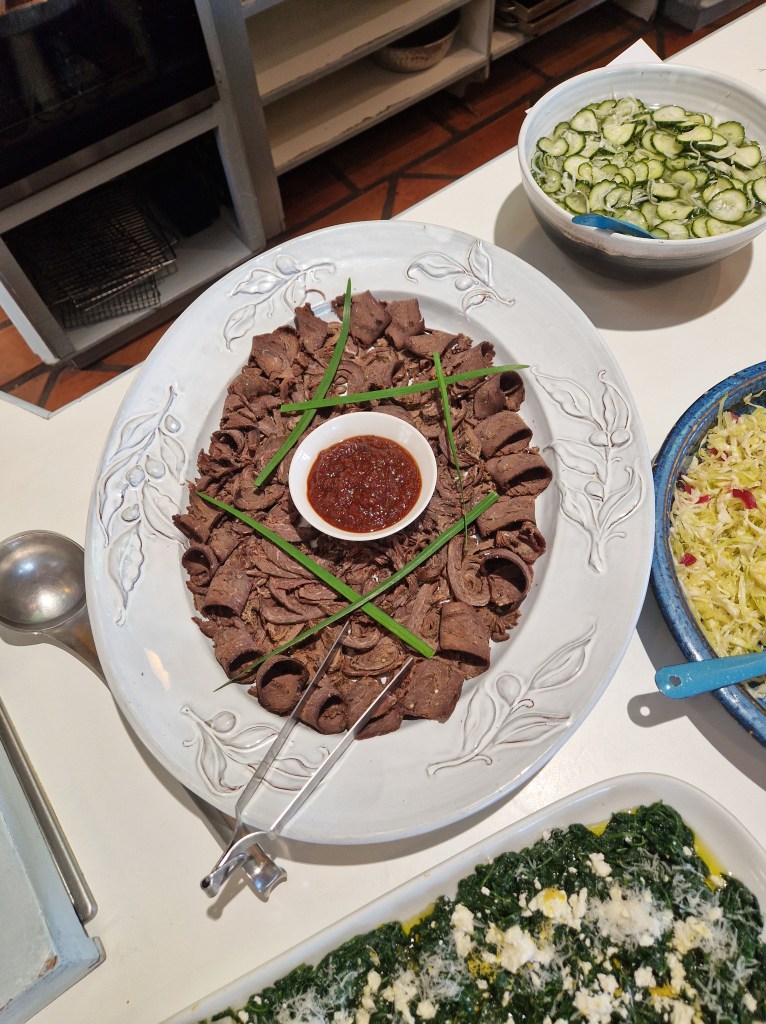
That was a long text bit, so here are a couple more pictures to keep J. happy. Our lunch today included the spiced beef I cooked last week! (Francesco made sure, though, that some was saved for me.)
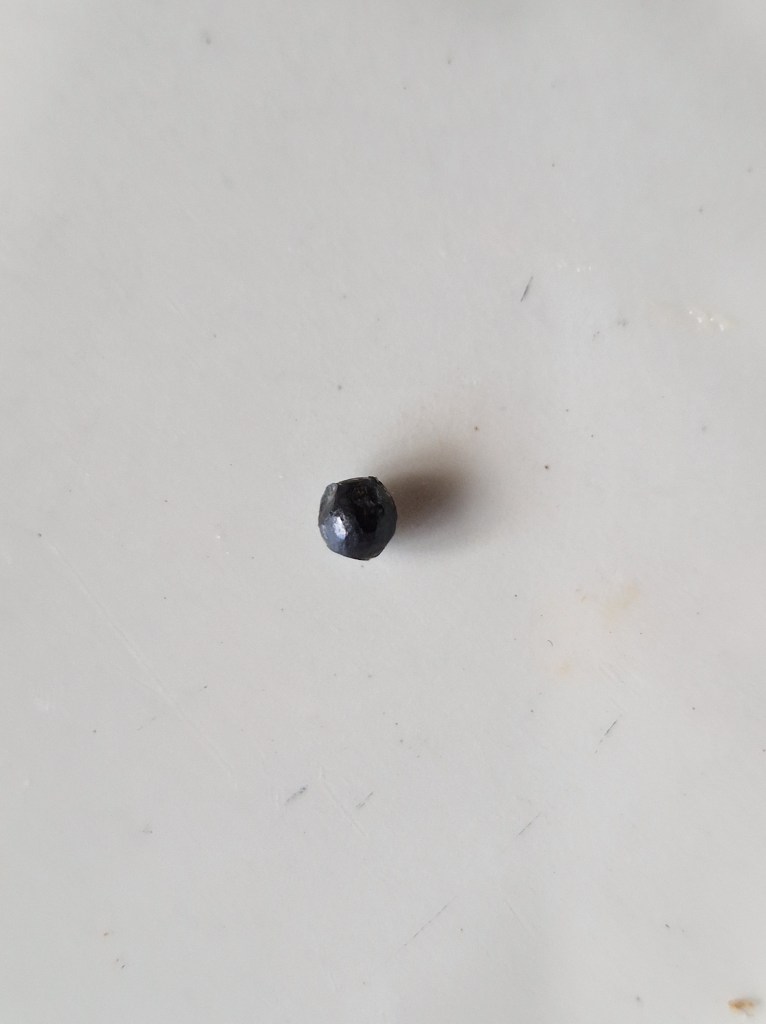
There was also a mallard dish on offer. I’m not sure where the mallard came from, but it was—apart from being delicious—genuine wild duck as evidenced by the piece of shot I found in my portion.


Leave a Reply