As T, a fellow Ballymaloe student who lives in Dungarvan had said, Waterford isn’t a beautiful city. He suggested I visit Kilmore Quay and Ardmore instead. I’m visiting Ardmore tomorrow on the way back to Shanagarry so figure I’ll visit Kilmore Quay today and also take the Lonely Planet driving tour around the Hook peninsula. The logical way to do this is to drive round the bottom of the peninsula, head off to Kilmore Quay then go round the top of the loop on the way back.
So, after breakfast, it’s off to Ballyhack to visit the Castle there. Tower would be a more accurate description!
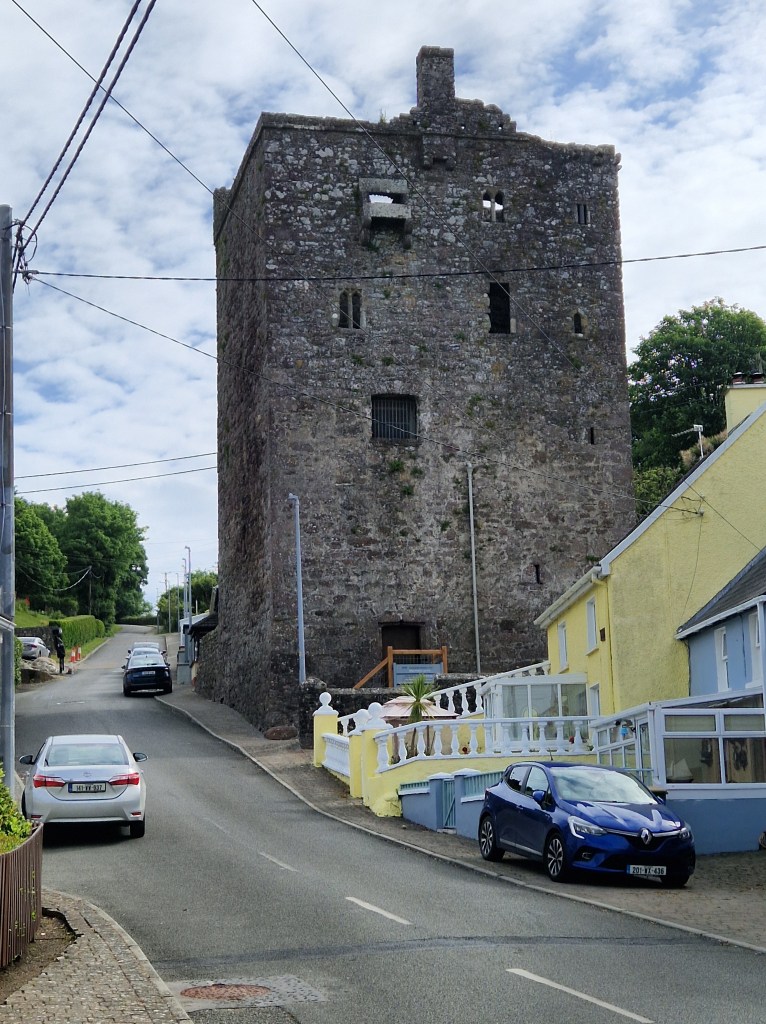
I arrive a few minutes before the 10am opening time but someone comes along to open up for me anyway and tell me a little about the history of the tower. I learn more, though, from his colleague sweeping up the pigeon droppings a couple of floors up. Built in around 1450 to guard a strategic river crossing it served its purpose well until cannons came along. Cromwell just had to site a couple on the higher ground around and it was easy enough then to blow a hole in the walls. After discussing Cromwell, though, the discussion turned to the intermixing of the Anglo-Norman invaders of the twelfth century with the Gaelic Irish. Despite prohibitions on both sides, intermarriage happened but the different lineages can still be identified, it seems.
Less historically, and perhaps apocryphally, the old schoolhouse was a restaurant a good few years ago and Bono was once turned away because he had a child with him. Queues went round the block when the story became known. (My cursory google search doesn’t find anything, however.)
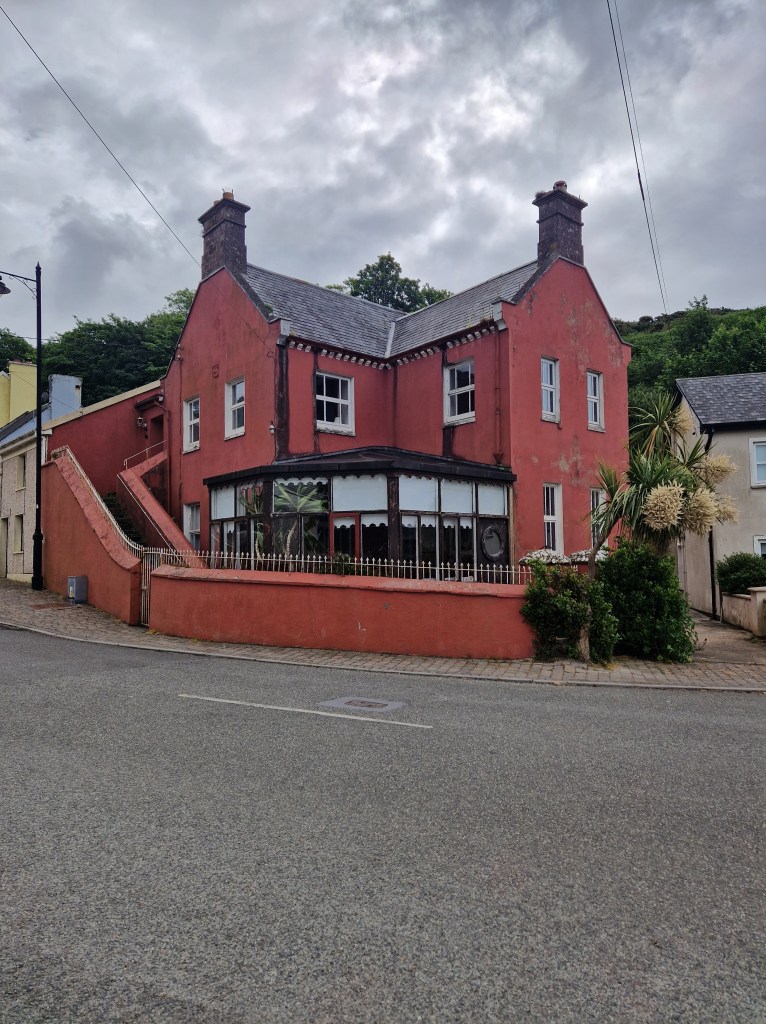
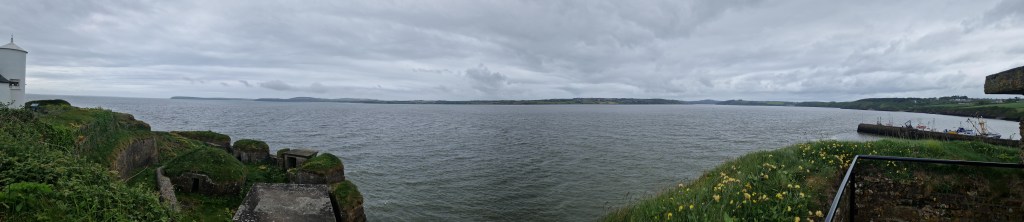
The next stop on the Lonely Planet road trip is Duncannon Fort, built to defend against the Spanish Armada and reinforced to defend a possible invasion by Napoleon.
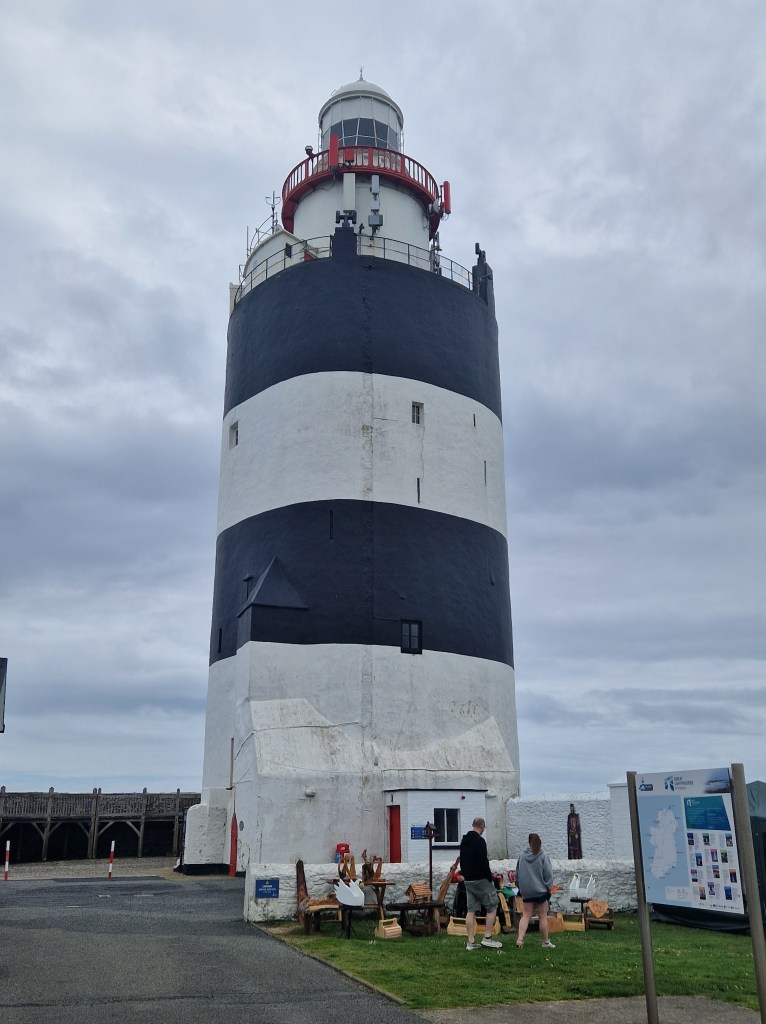
Much more interesting is the next stop, the world’s oldest lighthouse, dating to before 1240—and on the site of a beacon fire that supposedly goes back to the sixth century. Before the lighthouse was built the beacon fire was tended by monks and they were funded by William Marshal to build the lighthouse; it took them some twenty years, apparently. The light house has the structure of a medieval castle tower with one interesting difference: the spiral staircase goes clockwise. The staircases in castle towers go anticlockwise so right-handed defenders have the advantage wielding their swords against attackers. The monks, though, had to carry coal up to the fire at the top and wanted their dominant hand to be on the outside to ease this task. Their building proved to be solid: it stands today as they built it even if the technology for the light has gone from coal through paraffin and electric arc lamps to today’s highly efficient LED lamp.
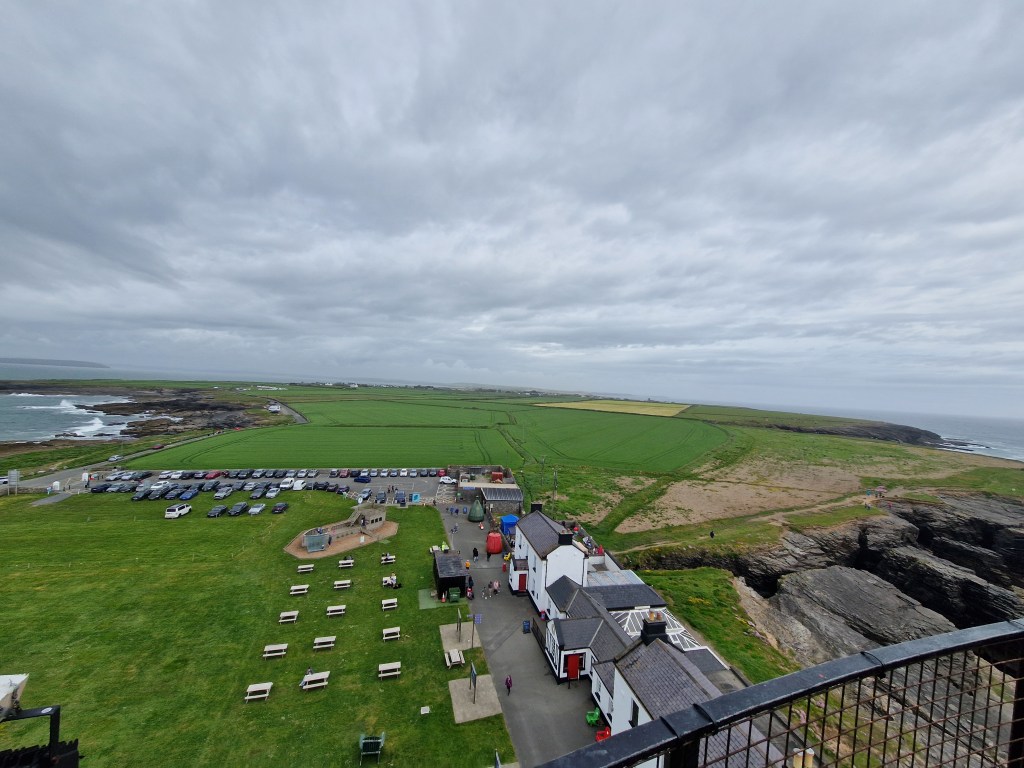
And William Marshal is an interesting character. Remember Strongbow and Aoife from yesterday? William Marshal married their daughter, Isabel, thus gaining vast wealth. One story about the founding of the lighthouse is that William wanted to ensure ships bound for New Ross, the port he founded as an alternative to Waterford, had safe passage. I don’t understand this as an explanation though as ships bound for Waterford also have to pass Hook Head. But this give me an opportunity to mention the Waterford Charter Roll which Waterford created to convince Edward III that they should have the monopoly as a royal port. Displayed in the Medieval Museum in Waterford it, if you believe Wikipedia, “is of historic significance as it contains the earliest contemporary portrait of a medieval English monarch, the earliest portrait of a judge (John Morice) in either Britain or Ireland, the earliest image of the medieval mayors of Dublin, Waterford, Cork and Limerick, and the earliest view of an Irish city.”
Back to William Marshal, though. On the way to the wedding, supposedly, his ship was beset by a bad storm and he swore to found an abbey if he made it to land. He did and he did, Tintern Abbey in Ireland, the “daughter” of Tintern Abbey in Wales. After the dissolution, the abbey became the home of the Colclough family (pronounced Coke-lee) until the 1950s. Some time in the early 19th century they created a 3-acre walled garden nearby which became heavily overgrown but which has been restored from 2010.
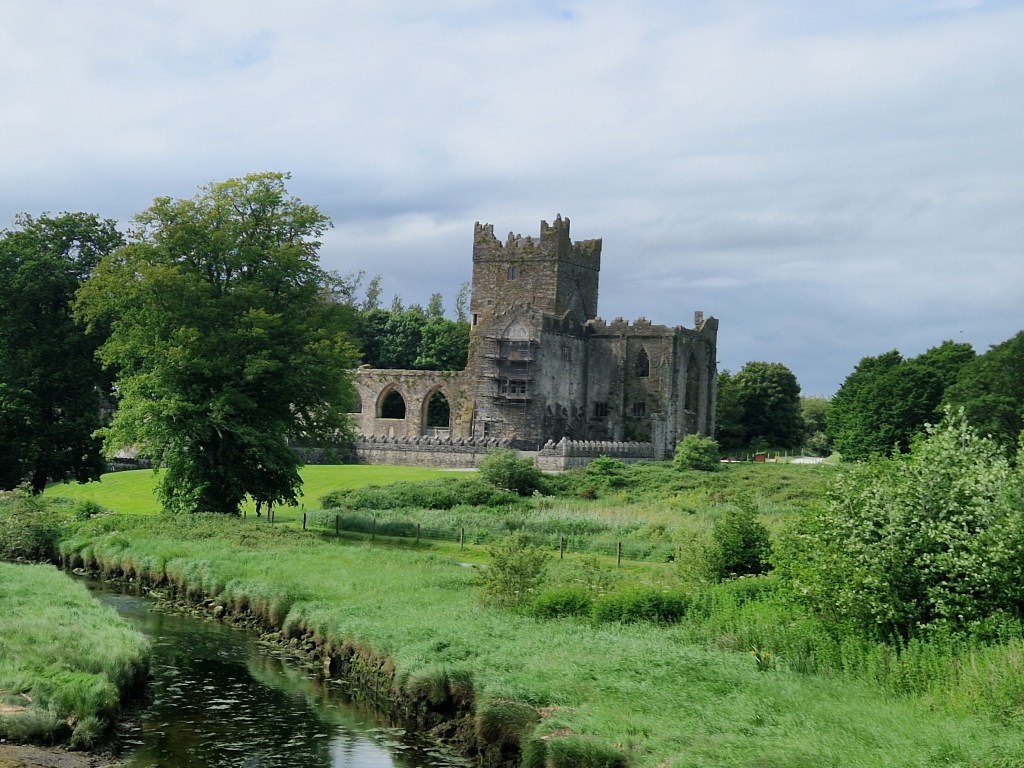
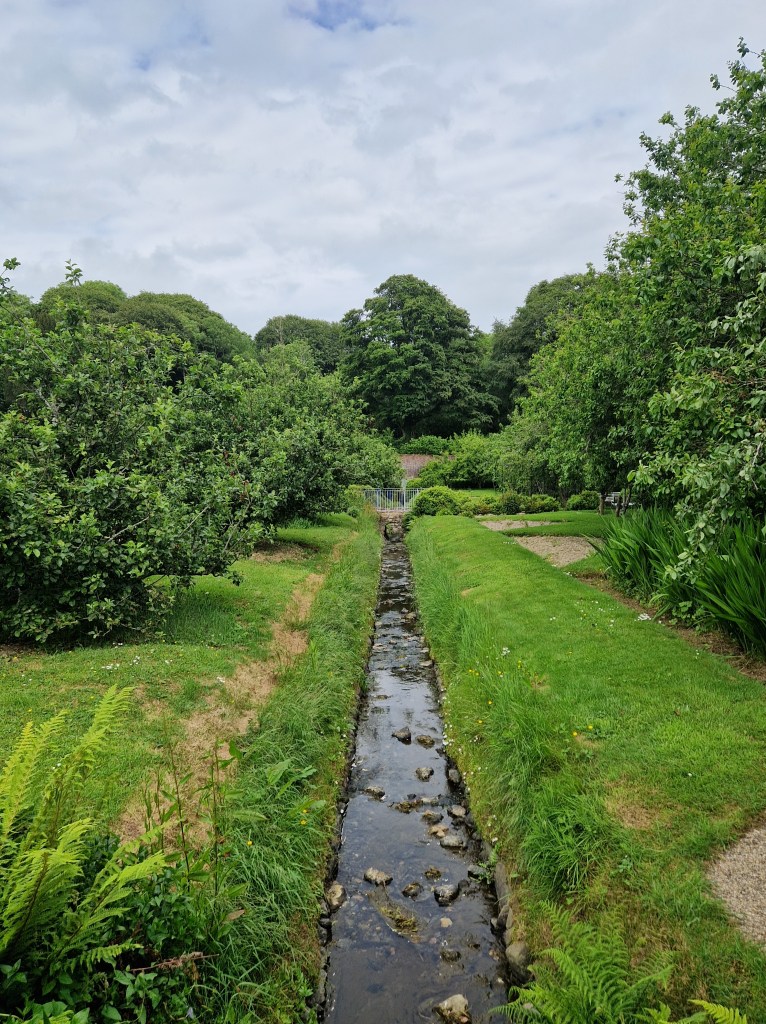
No food content to the blog today. And nothing on Kilmore Quay either—it was very busy this bank holiday weekend and the recommended deli looks to be no more so I didn’t spend much time there. Even worse, the restaurant I’d booked for this evening back in Waterford had no record of my reservation despite having verified my credit card. Ho hum.
Actually, I could add a food or, at least, drink related point. William Marshal founded New Ross so he could export produce from his Leinster lands without having to go through Waterford. But canny folk realised they could import wine into Ireland via New Ross, avoiding the taxes they’d have to pay to the Royal Port in Waterford. Naturally, Waterford complained to the king but he, John, was too dependent on William Marshal so the (fierce) dispute lasted many years. The Charter Roll was created to document the many judgements and decrees in favour of Waterford but which had not led to any resolution. Edward III was convinced and Waterford’s monopoly was restored—confirming its status as the (medieval) wine capital of Ireland.
 Food in Provence (and elsewhere)
Leave a comment