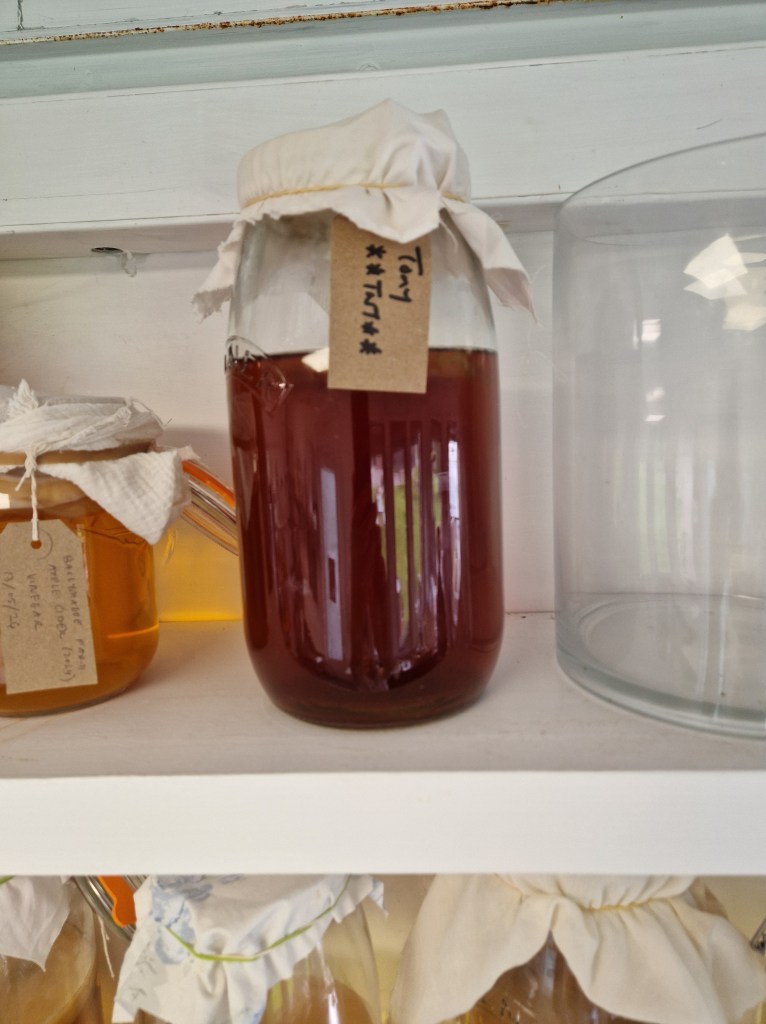
But first, my fermentation adventures have expanded to include kombucha (those that know me will understand that I’m skipping the more common milk based kefir!). The initial steps for the new ferment weren’t exactly hard: brew 750ml tea (using, to try to establish some ownership over the product, my own teas leaves rather than any from Maria’s stock), sweeten it and dilute (and cool) to 2l total. Then comes the magic: Maria added 250ml of ready made kombucha and a chunk of SCOBY (symbiotic culture of bacteria and yeast). This should grow over the next 10-14 days until I can repeat the process with the SCOBY and 250ml of my own kombucha to start the next batch leaving 2l of kombucha to drink. Here’s the new brew sitting on a shelf:
Before that, though, there’ll be a new step in the water kefir adventure. My grains have multiplied enough that I can reduce the amount I put back for the next batch to the initial 120g, leaving some left over. These extra could be used to start another batch but Maria doesn’t have enough kilner jars or shelf space for all of us students to do that so we need to preserve the grains for later use by drying them. And as Maria doesn’t want to risk polluting her production grains with anything handled by students (some of her kefir is sold in the Ballymaloe shop…) I’ll be able to take the dried grains home. Expect pictures of dried grains on Friday!
After a presentation by Rory of three cakes, it was time for the pasta class by a Ballymaloe alumna from 2022, Honey Lopez. She started, naturally, by making northern (egg-based) and southern (water-based) pastas and had some useful tips I need to try out—the way she brought the dough together, for example, and leaving it to rest for a few minutes before starting to knead. This allows the gluten links to relax a little, releasing bound water to make the kneading easier. Rory points out this is akin to the need to leave our yeast bread dough to rest for a few minutes after mixing the flour and water before kneading that.
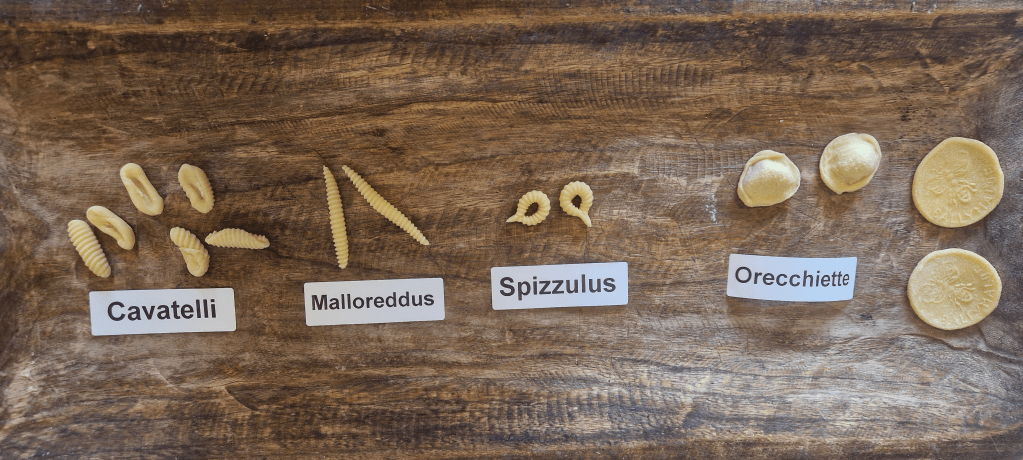
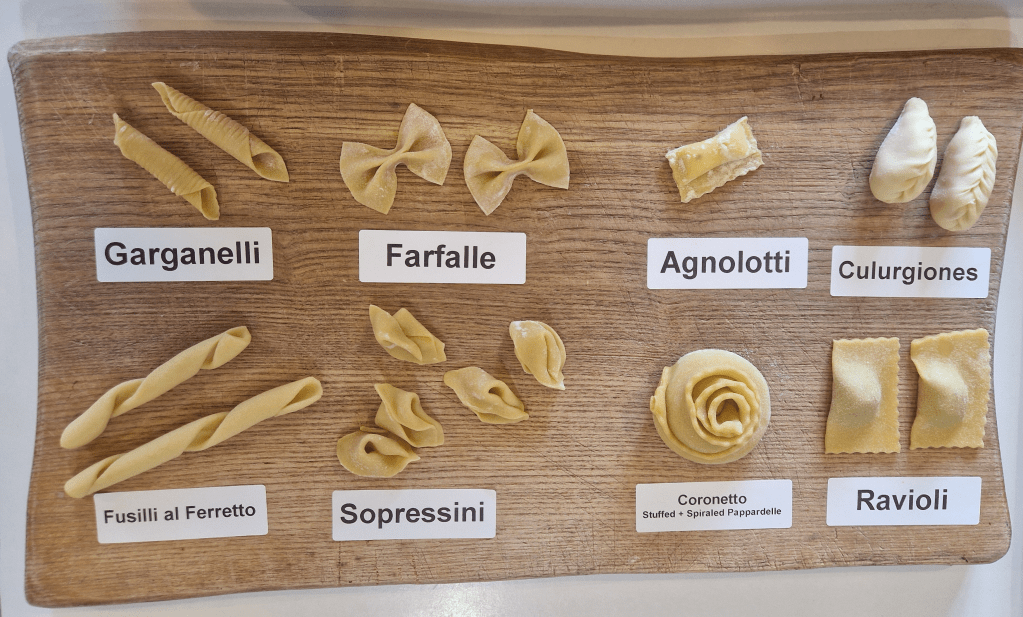
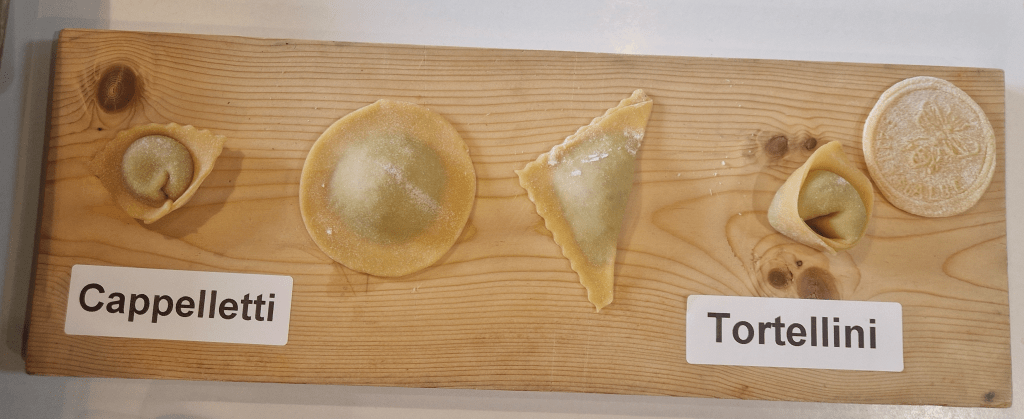
With the dough made, Honey demonstrated many different shapes that can be formed with water-based dough and different ways to fill and shape the egg-based dough. Seeing her demonstrate the shaping is way better than reading how to do it in a book! I just hope I can remember how to make the different shapes when I get back home. Especially the culurgiones: we buy things shaped like that in Valréas with a truffle flavoured filling; it would be nice to be able to make my own. (Advance warning to J.: some tools might be required!)
Here are some of the shapes that Honey demonstrated.
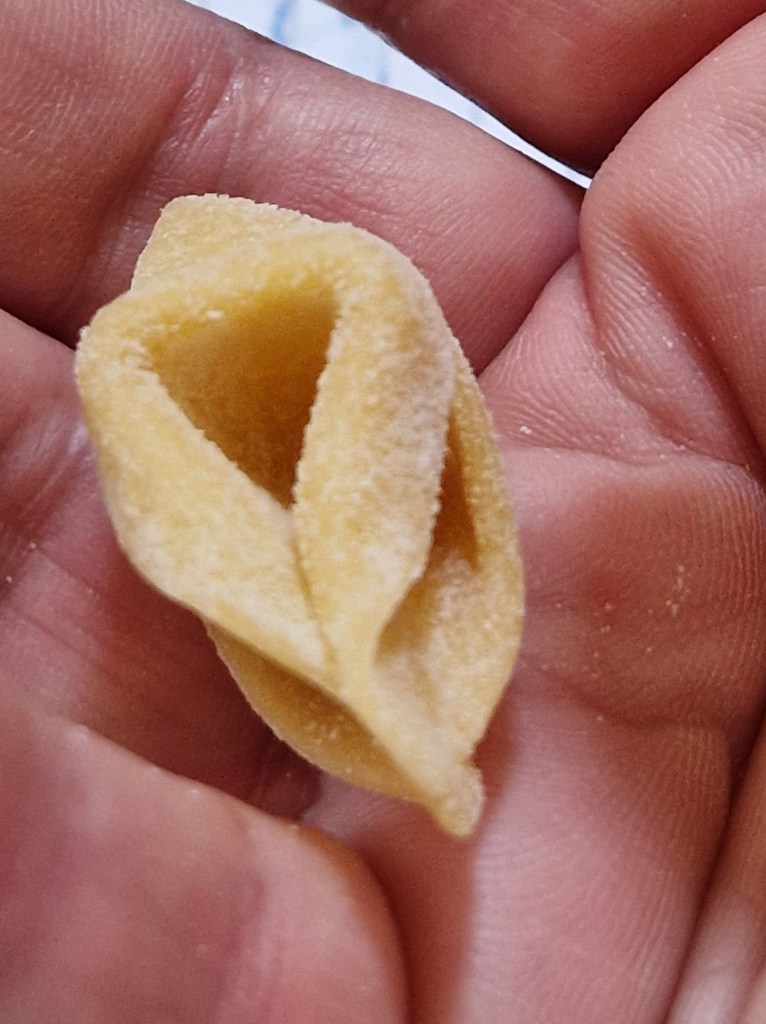
As I’ve said that watching the shapes being made is way more informative than reading about how it’s done, I feel I should stop writing now. We did, though, all get a chance to make sopressini; here’s mine:
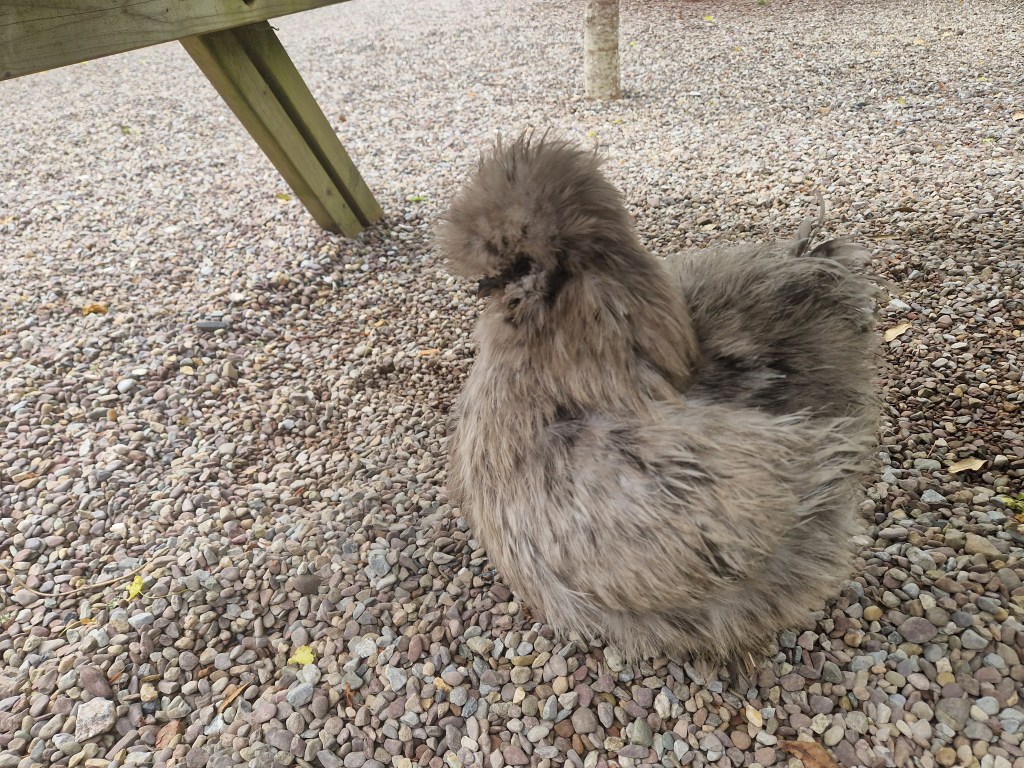
And here’s a bonus picture of a very fluffy chicken that was pecking away at the gravel near where I was taking some fresh air after lunch.


Leave a Reply