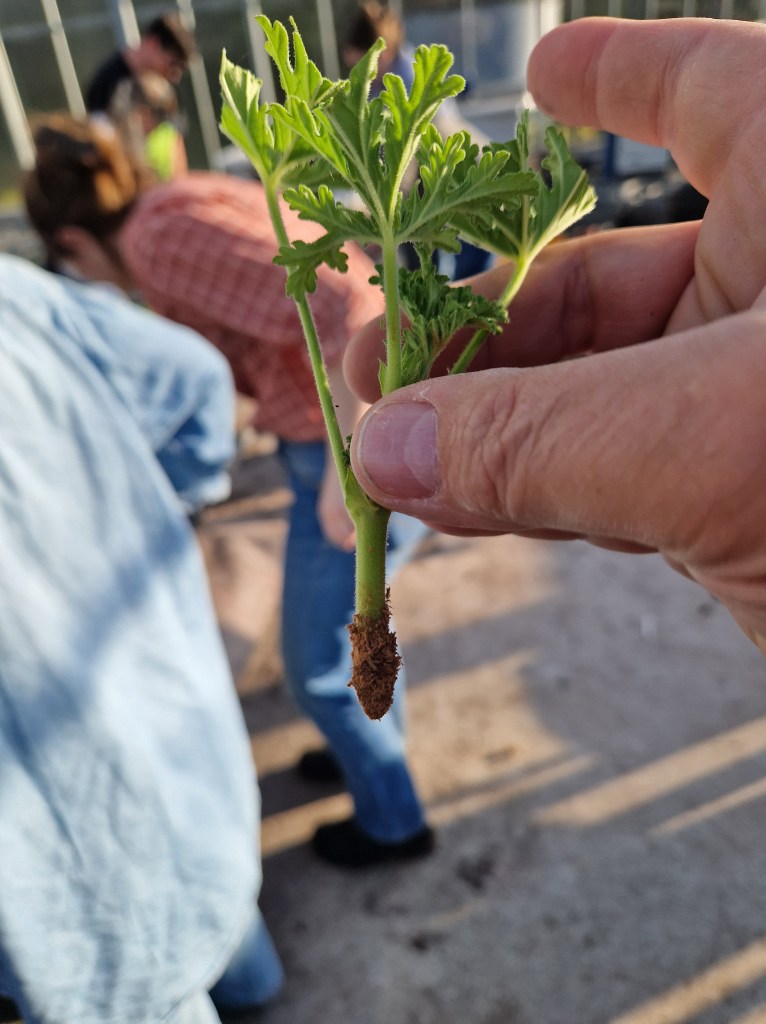
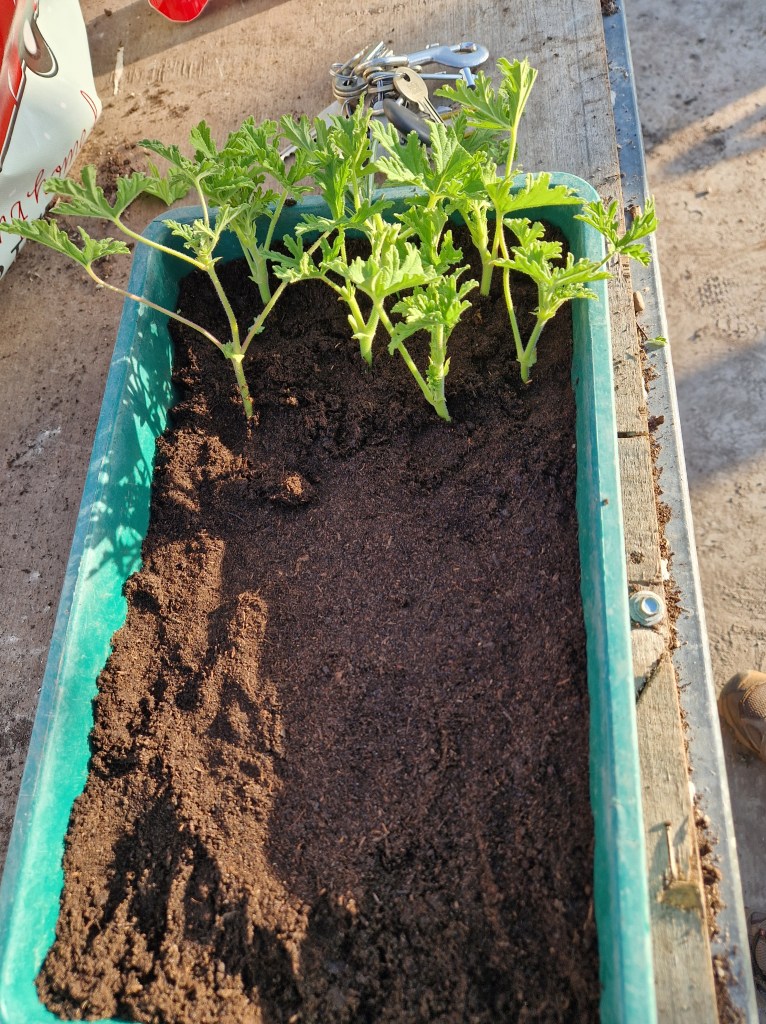
An early start this morning as there’s a 7am session in the greenhouse where we can work on preparing a vegetable bed, plant seeds or take cuttings. I’m most interested in the latter and we take a few from sweet geraniums (used a lot in the school so maybe we should grow some at home) and rosemary (of which we have masses anyway). As rooting compound is not organic, Ballymaloe can’t use it but apparently dipping the cuttings in a honey/water mix and then cinammon provides the same protection against fungi or whatever before the roots can develop.
We then move on to repotting various herbs and are given a choice of basil plants to repot and keep in our rooms. We’re recommended to cut the shoot of the plant when repotting to encourage growth so we treat that as a cutting. Ideally we’ll end up with two basil plants…
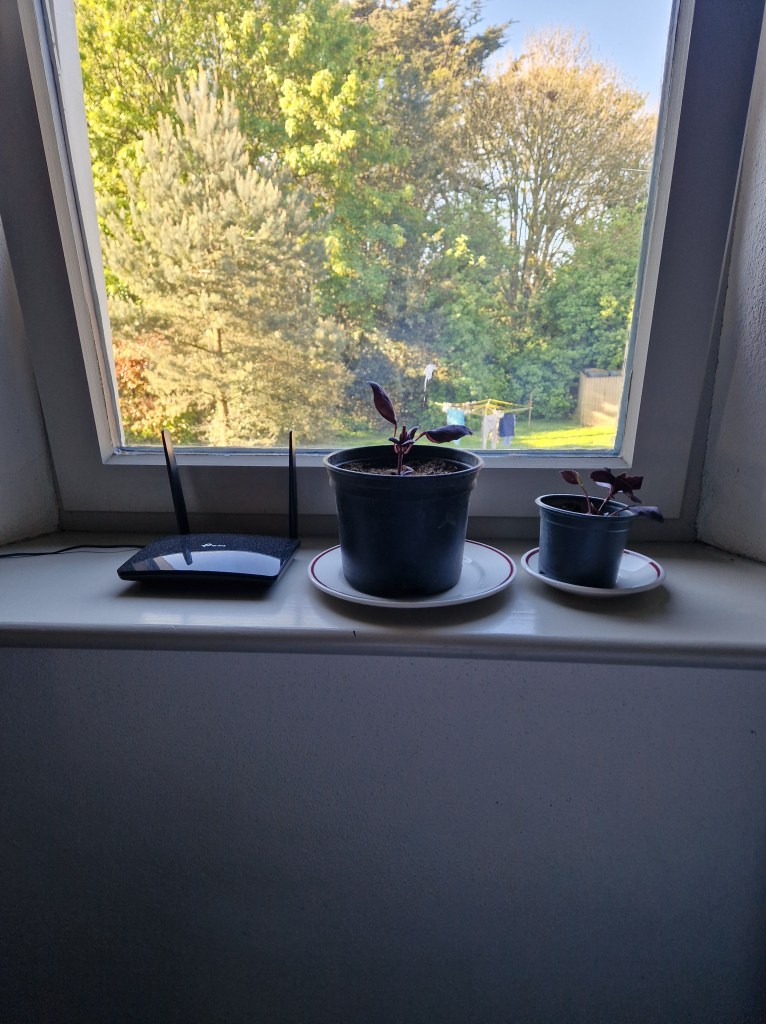
… but perhaps that windowsill was a little too sunny as my cutting was a little withered when I returned this evening. Fingers crossed!
After a brief discussion of tray bakes (the biscuit of the week and an essential part of any chef’s repertoire according to Rory O’Connel), we move on the main topic of the morning: milk and it’s various products—butter, cheese, yoghurt, …
Naturally, Ballymaloe are keen on raw, un-homogenised milk but there are some interesting points. Homogenised milk has much smaller fat globules (this is why they don’t all rise to the top) but this means it is no use for making hard cheeses. And it’s also why goat’s milk doesn’t make good hard cheeses: the fat globules in goat’s milk are naturally smaller.
There are also times where you can put various facts together to make sense of things. Cheese curds are cut much smaller for hard cheese which means more bits (and so protein) left in the whey. Parmesan curds are cut very small which is why parmesan whey makes good ricotta. Vice-versa, home made cheese generally has large-cut curds so you hardly get any ricotta from the whey (been there, done that); solution: use a mix of milk and whey when making ricotta at home.
Another fun fact is that, traditionally, dutch cheese makers used wooden vats. As the curds for hard cheese need to be heated they removed 20% of the whey and replaced it with hot water. This is what gives dutch cheeses such as Gouda their texture. And one more: the bacteria that give rise to the holes in Emmenthal only become active above 21°C; easily achieved in traditional summer cheese making but commercial producers have to heat the cheese to at least that temperature.
Yoghurt making is nothing new for me but I only heat the milk to 84°C whereas Ballymaloe heat it to above 90°C and you can go as high as 98°C apparently; it’ll be interesting to see if that makes any difference if I try it. They just make 500ml batches in a flask, though. I’ll stick to my 2l batches in the oven at home or a water bath here.
As there’s yoghurt, we also have labneh and, a new one on me, cardamom flavoured srikhand from India which Rory says goes well with strawberries—and then, to my delight, waxes lyrical on the subject of Gariguette strawberries!
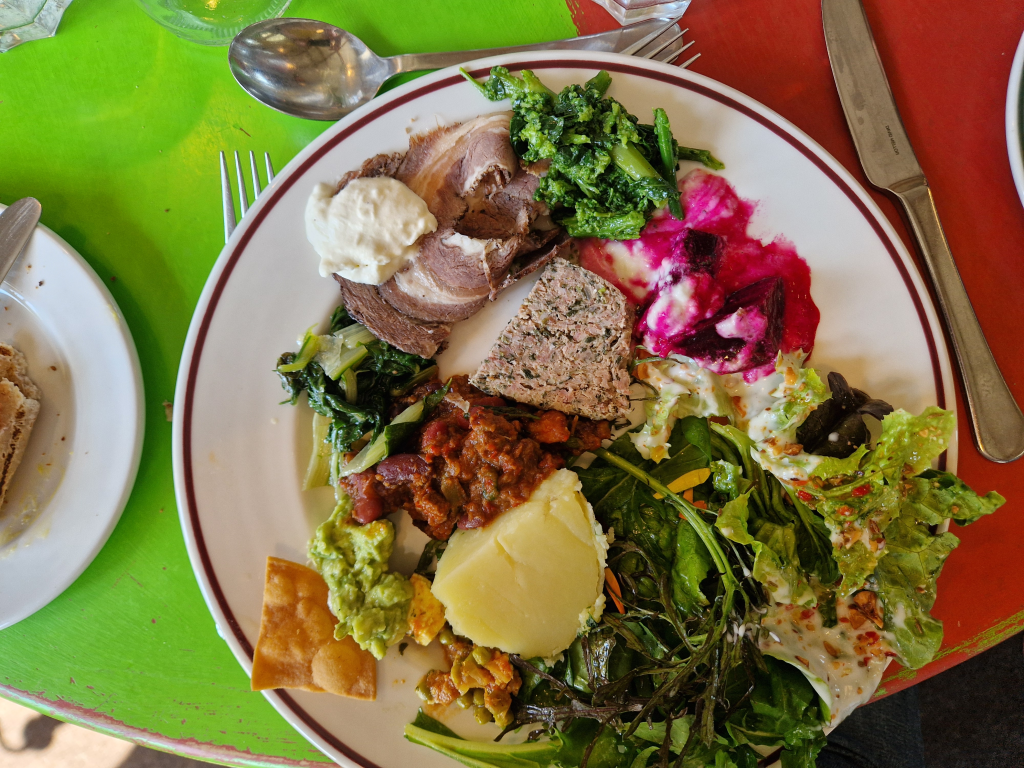
After the usual copious lunch…
… it’s on to another fun session on fermentation from Bacterial Girl Maria who vaunts the advantages of properly living in a Bacterial world. She covers milk kefir, water kefir, kombucha and sauerkraut. All of which we’ll now be able to make in the thrice weekly sessions in the fermentation shed. I can’t wait to start on Friday morning—although I imagine the shed will be rather full!


Leave a Reply