As is not unusual, pastry class started off with us preparing something for future use. First was the preparation and baking of a “pain de genes”, somewhat similar to a sacher pastry, but without chocolate. As with the sacher mix, you start by blending marzipan and egg then whisk this mixture to incorporate air, fold in first flour and baking powder and then molten butter. Divide between two 16cm rings and bake. This was my job; E. kept herself busy with the mise en place for a coconut and pistachio cream, leaping at the opportunity to use the mixer as soon as I’d finished. With the pain de genes in the oven, I started on a sweet shortcrust pastry, keeping the mixer busy in turn as soon as E. had finished… E. had to take over as the flour, butter and icing sugar were creaming when the initial timer for our pain de genes went off. As I expected, it needed a couple more minutes in the oven. What I didn’t expect was for this to turn into at least five as the oven door was open more than it was closed with people inspecting their sponges….
E. then chose to temper chocolate—probably to my relief and certainly something she’ll be doing more in the future than I will so I didn’t begrudge her the practice—leaving me to caramelise some bananas. Then the pastry precision exercise started.
I’d previously cut our crunchy-ganache-coated dacquoise sponge into six 3x12cm fingers and we each needed to produce at least six 3x12cm slivers of chocolate for the topping. You do this by spreading the tempered chocolate on a piece of plastic film, waiting for it to almost set, marking it out with a ruler, placing a parchment sheet on top and then keeping it flat under a chopping board whilst it sets hard. I had to wait a while for my turn as it’s not really something two can do easily at the same bench. (But there was no need for the devil to find work for idle hands; our bench is right in front of the washing and drying station…) I was quite pleased with my spreading of the chocolate on the plastic sheet; I think there was just the right amount left so I had a smooth even layer that extended only a little way outside the sheet (this is fine…). The longest dimension was ~30cm so, profiting from past experience, I used the spare 6cm to test how ready the chocolate was for pre-cutting. And I managed to get 10 thin slivers I considered pretty much perfect!
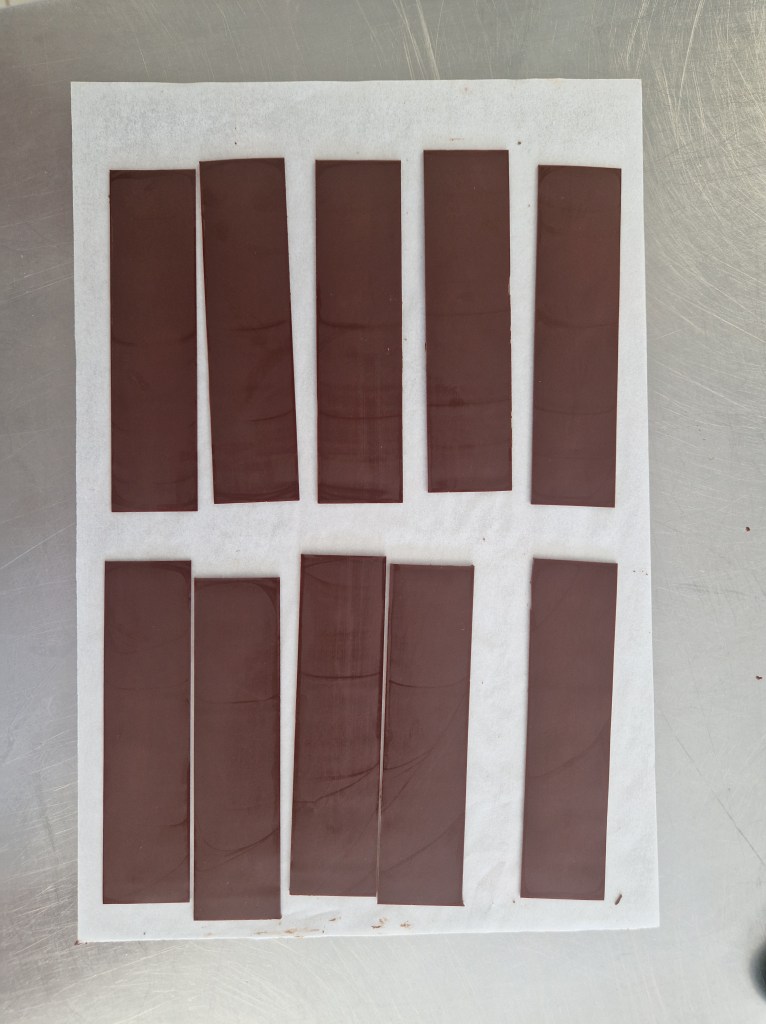
Then more precision to turn these
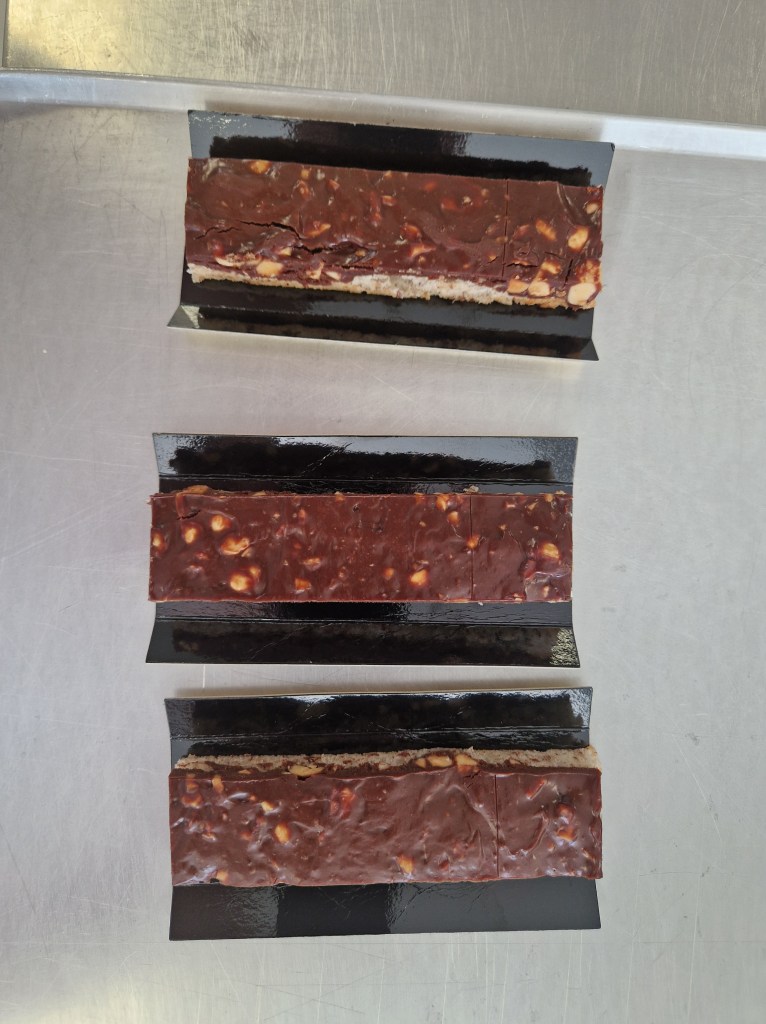
Into these:
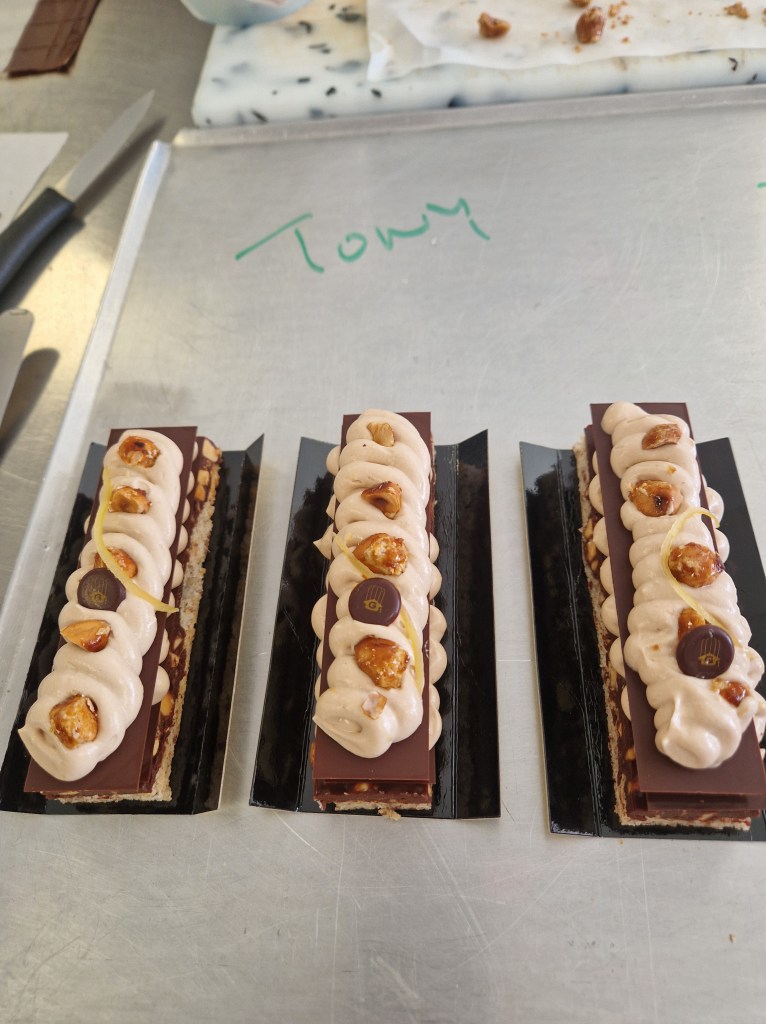
First we piped a little strip of the whipped ganache montée (precision here too: too little whipping and the ganache is too runny to pipe, too much and it splits; there’s a very fine window which E. hit) to secure one chocolate sliver. This was coated with a complicated figure-of-eight piping of the ganache (probably just as well you can’t see mine), topped with another chocolate sliver on to which we piped the ganache in a simpler pattern which was then topped with chunks of caramelised hazelnut. My top layer of piping wasn’t the best either; apparently I was holding the nozzle too far away from the chocolate sliver… Chef’s opinion is that piping is easy, but with the rider that you have to do it every day!
Unfortunately, a bike trip back to the residence wasn’t the best treatment for these delicacies, but they tasted just fine.
The precision exercise for the afternoon was to produce a lobster and fish egg mousse coated neatly with cucumber:
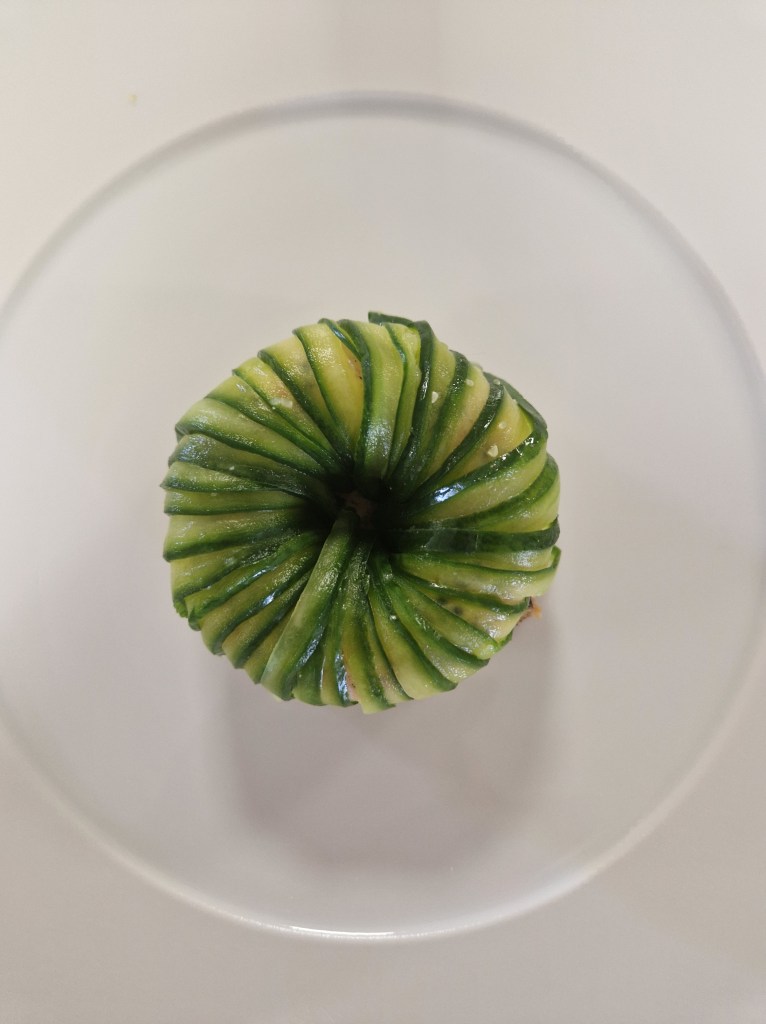
First catch your hare prepare your lobster mousse (heat lobster bisque, add gelatine sheets, cool then add to whipped cream; pour into a mould with lobster meat and fish roe; blast chill) and cucumber slices (cut thin lengthwise strips with a mandolin, salt to remove water, trim out the seeds). Then decorate. Simple. Chef heard me muttering that this was not a recipe I was tempted to repeat at home and retorted that he had once had to prepare a hundred of these domes for a G7 dinner. With colleagues, but it still took them a good few hours!
Something I could try at home is to create filo pastry cylinders. We folded a buttered sheet of filo pastry in half, buttered the top, cut it into strips, rolled these round a tube and baked them for ten minutes or so. Hold the tube with tweezers and push off the crispy cylinders as soon as they are removed from the oven. Ours were filled with basil, mint and coriander leaves rolled in another thin strip of cucumber, but other fillings are clearly possible—and chef commented that spices or other flavourings could be placed in the folded over sheet.
L. prepared a pistachio sablé base for our mousse and we had a piping bag and a squeezy bottle of blitzed mousse mixture (sans lobster flesh) for plating as well as a pumpkin seed and almond praliné (toast these in a frying pan in olive oil, add sugar to caramelise then blitz to a paste). As chef pointed out, there aren’t ten thousand different ways of presenting this, so we all ended up with variations of chef’s offering. Chef considered mine very presentable (and a great improvement on my offerings of a couple of months ago).
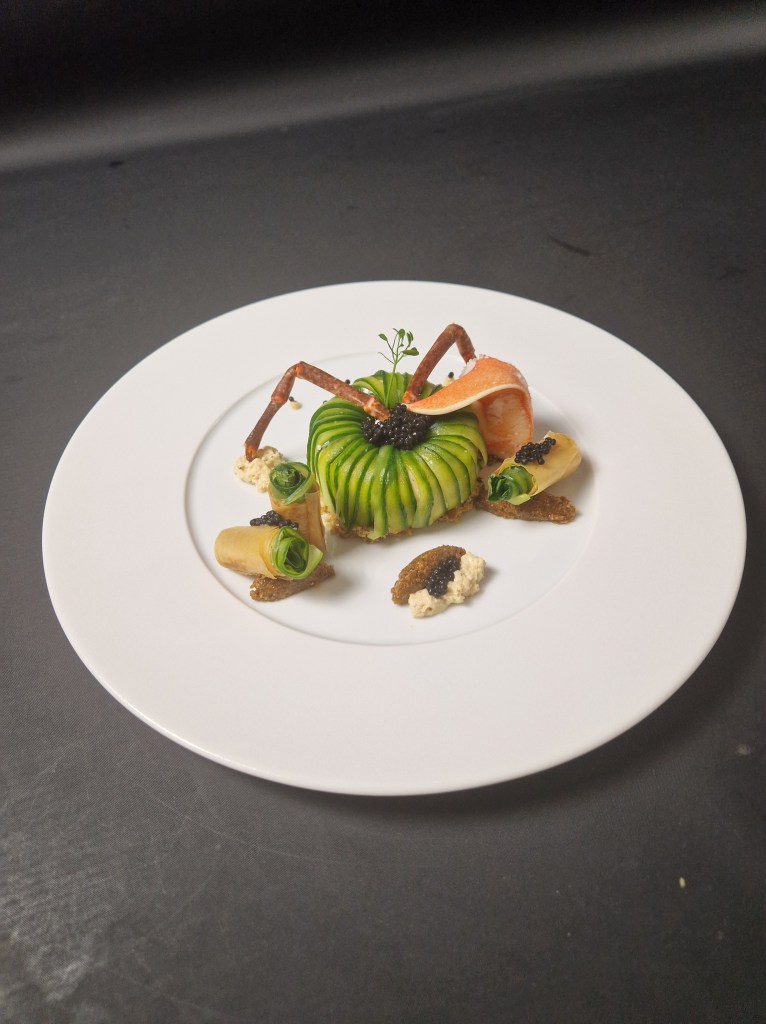
He particularly liked the precisely placed fish eggs on the dots of mousse mixture:
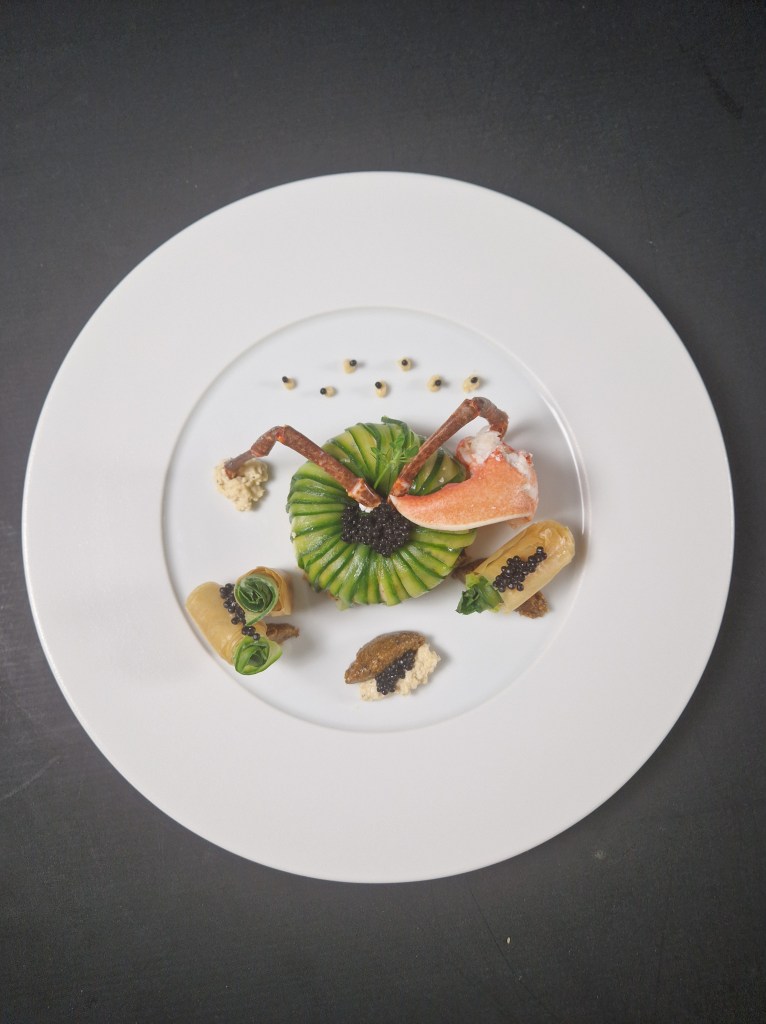
He didn’t ask if they’d been added solely to improve the look of the squeezy bottle dots… Serendipity: (almost) everyone found the piping bags and squeezy bottles of mousse mixture very difficult to use; you can see this from the piping in front of the praliné quenelle and under the lobster claw. I needed to fill the blank space on the plate, though, so I had to try making the dots even though I’d been warned it was almost impossible by the teams at the other end of the kitchen—the mix in our bottle had been overdluted in an attempt to make it useable and I heeded the warning not to use that one!
 Food in Provence (and elsewhere)
Leave a comment