Desserts come quickly today. First we prepare the base for a chocolate fondant. This doesn´t take long, but needs to be kept in the fridge overnight for the best results. The next task is also easy as it is all done by chef: preparing the nougat for a frozen nougat dessert. He prepares enough for 18 domes which will sit in the freezer overnight whilst explaining about roasting nuts (@150-160°C to ensure they cook through without burning; no need to roast pistachios), restaurant good practice (use local ingredients) and nougat economics (nougat de Montelimar must have at least 50% nuts; these are the expensive ingredient so companies prefer to skimp here and use more sugar).
Then we have an exercise in folding cornets (paper piping cones) from parchment paper. Naturally our pastry chef has a different technique to our cookery chef but I manage OK and provide N. with a few as well as making my own.
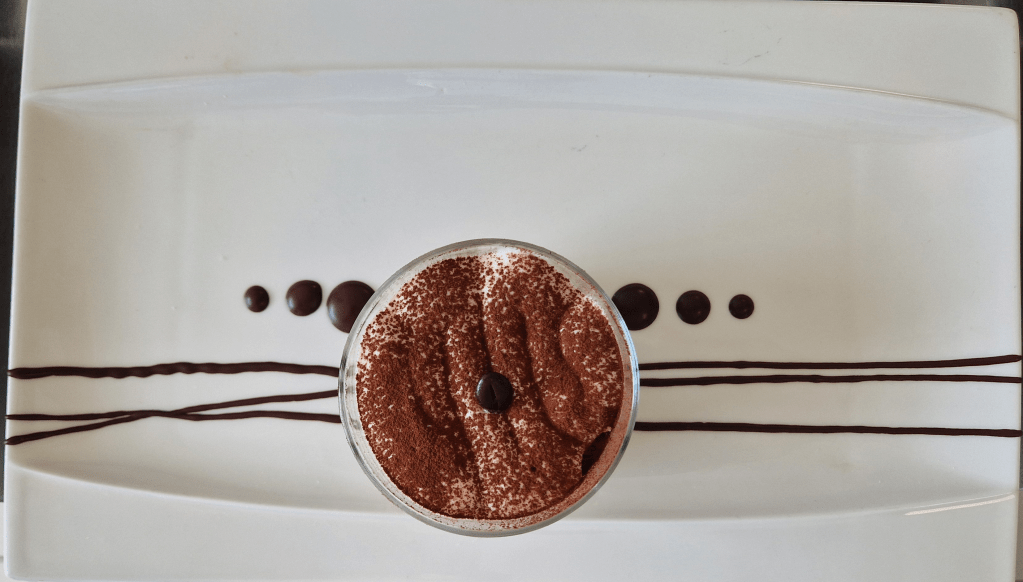
These are needed as chef wants us to pipe a chocolate decoration as we plate our tiramisu. He demonstrates what he wants and gives us 10 minutes to produce the same—the logic being that no customer will want to wait long for a tiramisu. This is a bit of a challenge for me and N. since we’ve been worried about chef-of-the-week duties and our chocolate isn´t melted yet. Still, we manage with a couple of minutes to spare and, although my blobs could have been neater, I’m happy with the lines.
The pavlova challenge is harder. We have 30 minutes but need to pipe a nice decoration on the plate whilst whipping cream, microplaning five of the small meringues we made yesterday so they sit neatly and decorating them with a small piece of candied chestnut. Then we pipe on the cream, place the decorated meringues on the plate, decorate them with blueberries and meringue sticks, … I cut too much off the end of my cornet, and also at an angle, so my lines aren´t the best. However, nothing falls off when I carry my plate to chef for inspection—he points out that dishes have to be plated to make things easy for the waiters taking plates to the customer.

The afternoon’s fish challenge is dos de cabillaud au jus de bouillabaisse, boulgour fondant et croustillant. Chef stresses the importance of establishing flavour in the soup for the bouillabaisse from the beginning as we cook our rock fish and vegetables—but we nevertheless have to chop our vegetables for the mirepoix perfectly, something that is hard when you are constantly being called back to watch a demonstration of the next stage in the preparation. Woe betide anyone who leaves the induction hob too high under the bubbling stock… We also need to juggle pans between the table-top induction hob and the professional gas hob as at one stage we have three pans on the go: soup, boulgour and water to cook broccoli, carrots and fennel “a l’anglaise¨! K. and I cope well in general but chef is less than impressed with our piping of aïoli dots given that we are taking the pastry course as well. I pipe a few more when he’s demonstrated the technique. K. and I blame the blobs, though; they seem to want to slide off the plate rather than staying still as they are piped.

The wine course tonight is devoted to sweet wines which we pair with some of our recent pastry offerings—pavlova, tiramisu and black forest gateau. The first is light and slightly acidic and goes well with the pavlova. The second is sweeter but doesn´t match well with any of the desserts as it is too sweet for the pavlova yet not able to stand up to the coffee and chocolate flavours of the other two. Fortunately we finish with a Rivesaltes that can hold its own with both. I acquit myself reasonably well in the subsequent “name the aroma” game, recognising 11 of the 14 samples.
 Food in Provence (and elsewhere)
Leave a comment