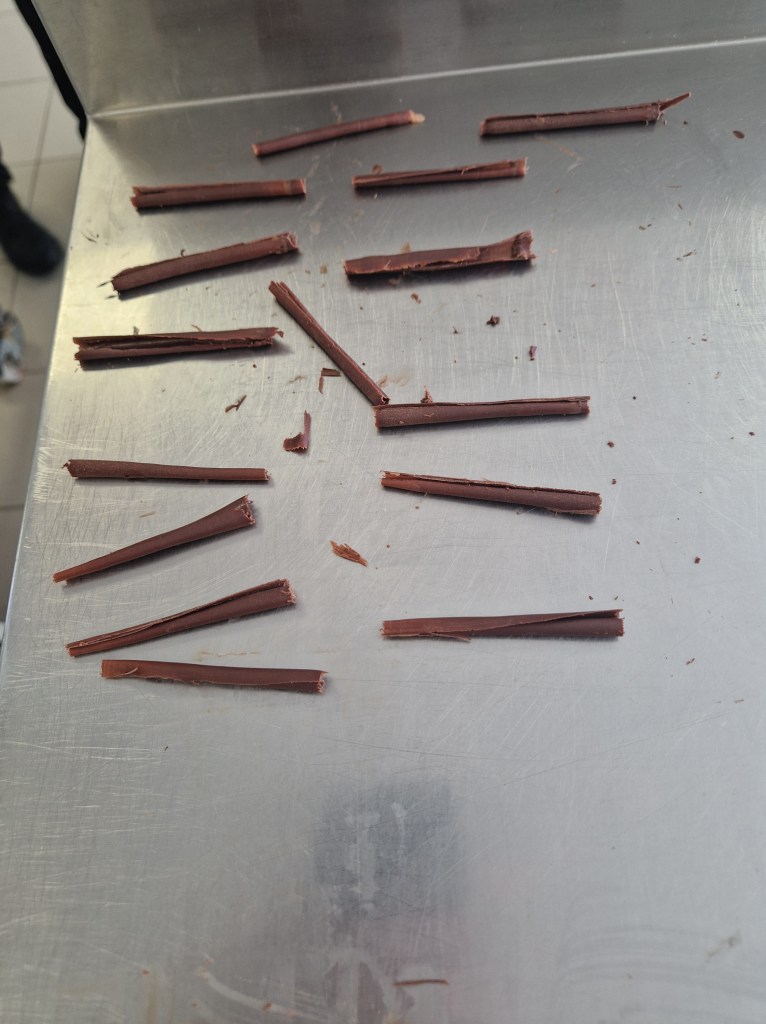
We have a lesson in physics from our pastry chef this morning, even if he doesn´t call it that. Essentially, though, he’s explaining that temperature and heat are not the same thing. Normally you make a ganache by heating cream, pouring it onto chocolate and mixing to make an emulsion. The problem today is that we have a recipe with 210g of chocolate and 120g of cream and glucose. That much liquid at 100°C will never melt all that chocolate. There’s not enough heat. Chef explains that the sum of the chocolate and cream temperatures must add up to 120°C; this seems a bit empirical to me, but it surely works for the range of amounts of the different things we are using. Today we (me for my team, something I regret as you will see shortly) semi-melt our chocolate at 35°C, bring the cream and glucose to just short of a boil at 85°C and create our ganache. Which we then need to pipe but it’s far too liquidy. Cooling it down in a fridge is an option but that (like cooking eggs for a hollandaise over a bain marie) is for wimps now we’ve learnt how to cool chocolate by pouring it on our bench and mixing it like cement. After what seemed like ages, we have pipeable ganache. D., my partner, has the easy job of doing the piping but then has a go at the “cement mixing” as it’s her turn to temper our chocolate so we can practise making our spirals and cigarettes. I finally get the hang of the cigarettes (you really need to move quickly), but however good my spirals look on the acetate support, they collapse when I peel this off. Sadly, chef points out he expects the test spirals to be presented without acetate. Did anyone really think otherwise?
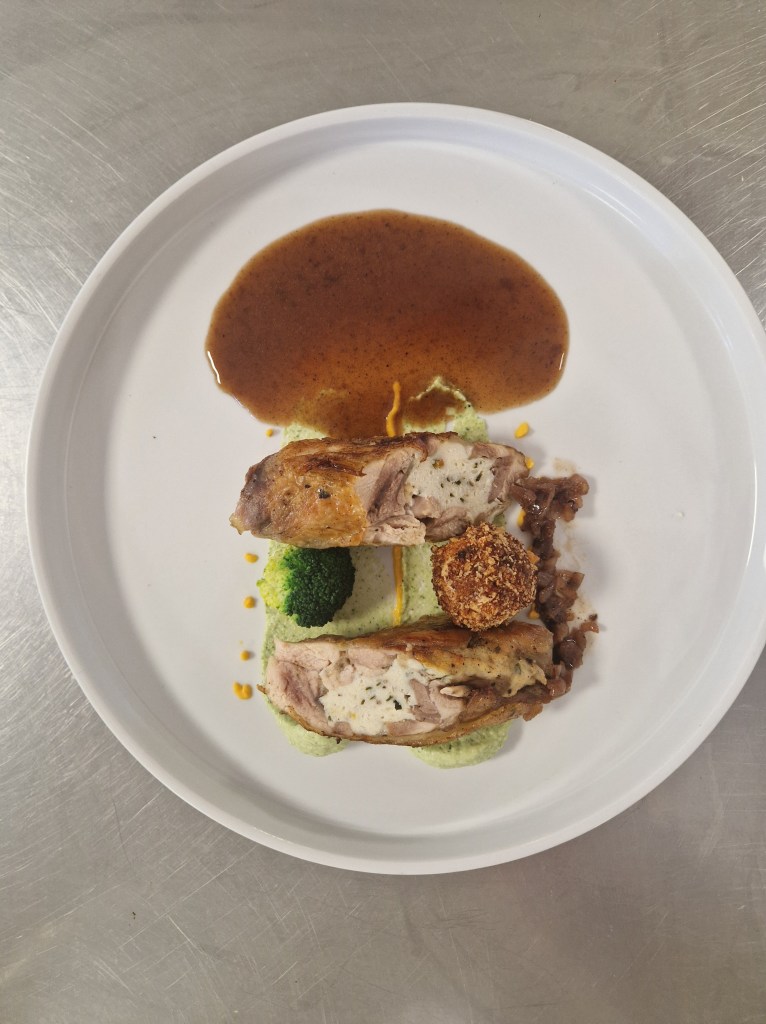
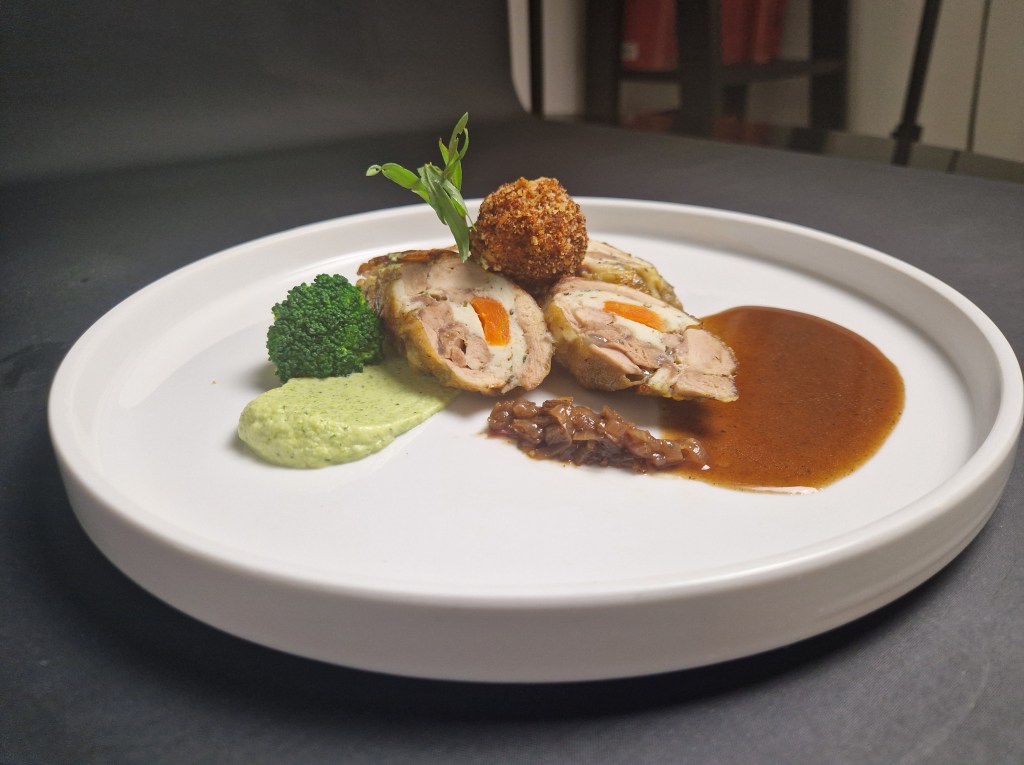
In the afternoon we make a chicken breast stuffing to turn our boned leg into a ballotine, turn our chicken liver and heart into a little cromesquis, prepare a port jus as well as broccoli and carrot purées. There’s another science lesson here. Blended farce recipes often include egg whites as they contain albumin which helps to bind the protein together. Chicken breasts, though, naturally have enough albumin so you don´t need to add the egg whites as you would for, say, a fish farce. C. and I each make our chicken leg ballotines then she prepares the jus whilst I cook and blend the liver and hearts and pack the mixture into moulds to cool. After a while we encourage the half-spheres to stick together, coat them in bread crumbs and deep fry them. That’s the easy version of cromequis; chef promises us we’ll be learning to produce ones with liquid hearts before the course is over.
I try to be original in my plating but am accused of being unambitious. Bistro chef level rather than Michelin star level… Chef tells me I have enough time and he approves of my second offering. I later have an interesting discussion with L. about plating fashions. L. owns restaurants and doesn´t always agree with chef on what makes a good plate. Either way, though, my first offering was doubtless too rustic.
Rustic our wines were not as we sampled three Burgundy offerings—a Chablis and two reds from Côte de Beaune. Opinions differed on the Chablis as some found it a little too acidic even if opinions mellowed as the wine warmed. We have to say what we would pair our wines with—not simply “fish”, “poultry” or “meat”, but a dish of some sort—and I amuse people by saying I would pair the Chablis with roast chicken, salad and a buttery sauce eaten on a terrace in the shade in the summer and the first red with the same meal eaten in the spring or autumn. Pretentious, moi?
The second red is a much more elegant Aloxe-Corton 1ere cru and there is some disagreement on the pairing. J. and I agree on pork or pigeon but C. is keener on beef or venison for which J. and I argue Rhone wines would be a better match. J. then has our sommelier agreeing the wine could be good with a Boeuf bourguignonne before she realises he means using it to cook the dish rather than as an accompaniment at which point she becomes apoplectic! J. is somewhat dismissive of Pinot Noir wines during the lesson but I give him a lift back to the residence and we essentially agree that Burgundy wines cost a lot because they can charge a lot whilst we prefer the Rhone Valley style. I guess we’ll see in tomorrow’s lesson as that’s where our wines will be from.
 Food in Provence (and elsewhere)
Leave a comment