As well as economy of material and ingredients, chefs try to install the importance of efficiency and economy of time: collect ingredients for a mise en place that are together (e.g. eggs, butter, milk and yeast in the dairy fridge) together not one at a time. And use a minimum of containers to minimise washing up (and stack them efficiently on your station and on the to-be-cleaned racks).
So, it’s been frustrating for me that twice a day I see people struggling with the hose that we use to clean the floor because every one puts it back coiling it over-and-over rather than over-and-under. If you don’t know what I mean, you’ve likely been coiling things wrong so google “how to coil a cable” and you’ll never struggle with twisting extension leads again. I try to show a few people in our class and, after talking to chef P (who says this time waster has been mentioned by people in previous schools…), to the afternoon pastry class. Unfortunately, our hoses are a lot harder to wrangle than the microphone cables I learnt with in the early 80s so people aren’t convinced. N. in my pastry class, though, calls me over this morning and I take out a length of coax cable I’ve taken in to show the technique. 2 minutes later, there’s a neatly coiled hose, even if the loops could have been longer. The problem is that we need the afternoon class to put the hose back properly so we don’t suffer…
Anyway, you want to read about the cooking. So for pastry today we finished our tartelettes pomme verte.
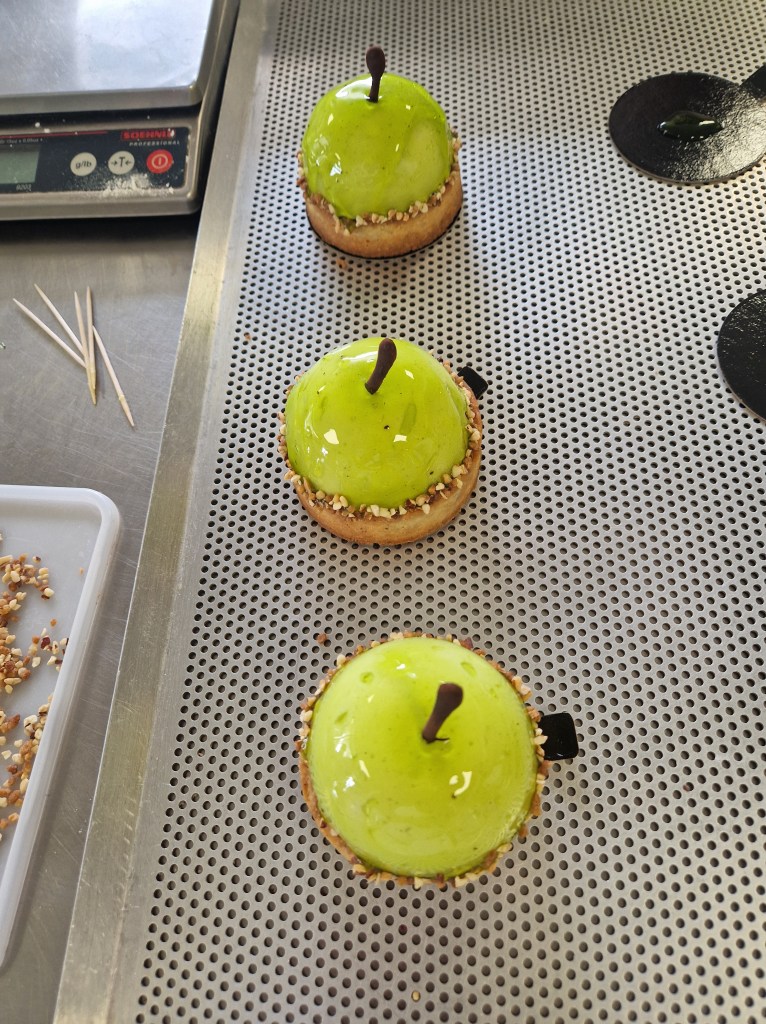
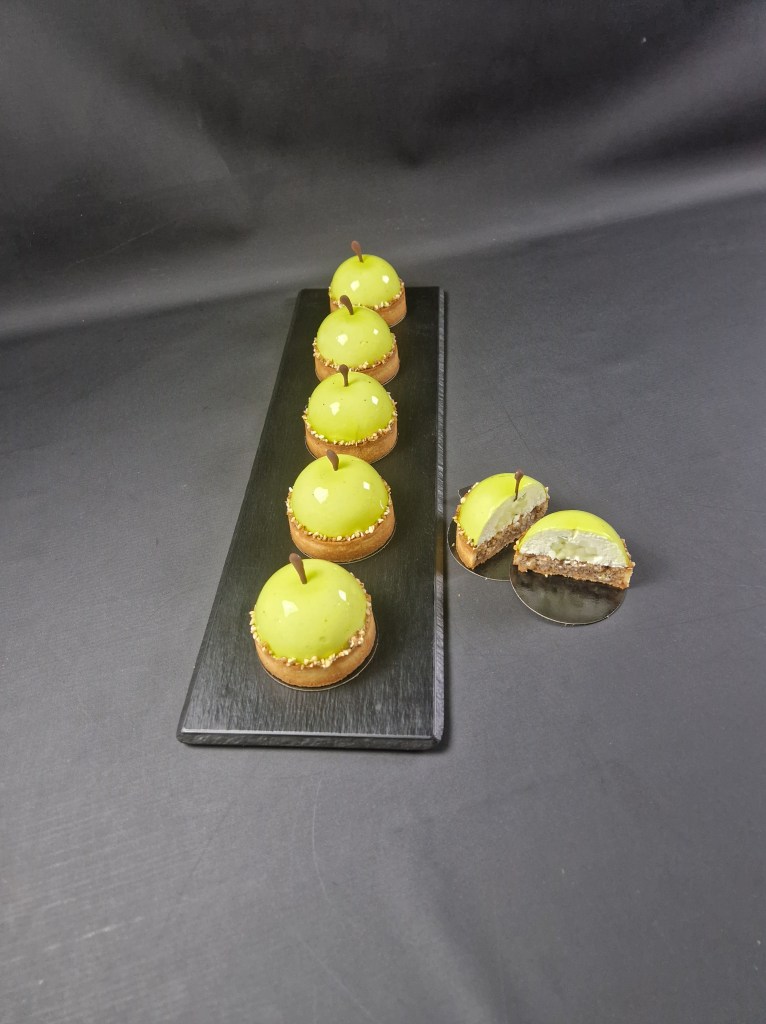
Not really a fair comparison as he had the professional backdrop. And I bet mine tasted just as good, anyway. More seriously, I was much happier with my pastry cases (not least as I could microplane them) but I still don’t have the lightness of touch needed to get them perfect. Notice I haven’t shown E.’s tartelettes next to mine on the tray!
We also prepared a genoise sponge in preparation for making a black forest gateau where I learnt a) that heating the eggs and sugar before whipping means you can incorporate more air and b) how to spread out the mixture with a massive offset palette knife—although it was E., of course, who took over towards the end as she’s done this thousands of times before.
We have a little more time for lunch today, then it’s off to cookery class where we prepare butternut gnocchi with artichoke, mushrooms and bacon. I turn an artichoke for the first time under the watchful eye of—and with helpful comments from—the chef then we make the gnocchi with baked potatoes. This would have been better if my partner had agreed the egg sitting on the bench needed to go in before we started to mix the potato and butternut flesh with the flour and parmesan. As it didn’t, the dough was too sticky after I finally worked the egg in but I could rescue it with some extra flour (and I don’t think the end result was too bad). Chef liked my plating but considered I had too much greenery (don’t make it look like you are adding decoration to hide things); O’s offering wasn’t considered as pretty but had the right amount of greenery.
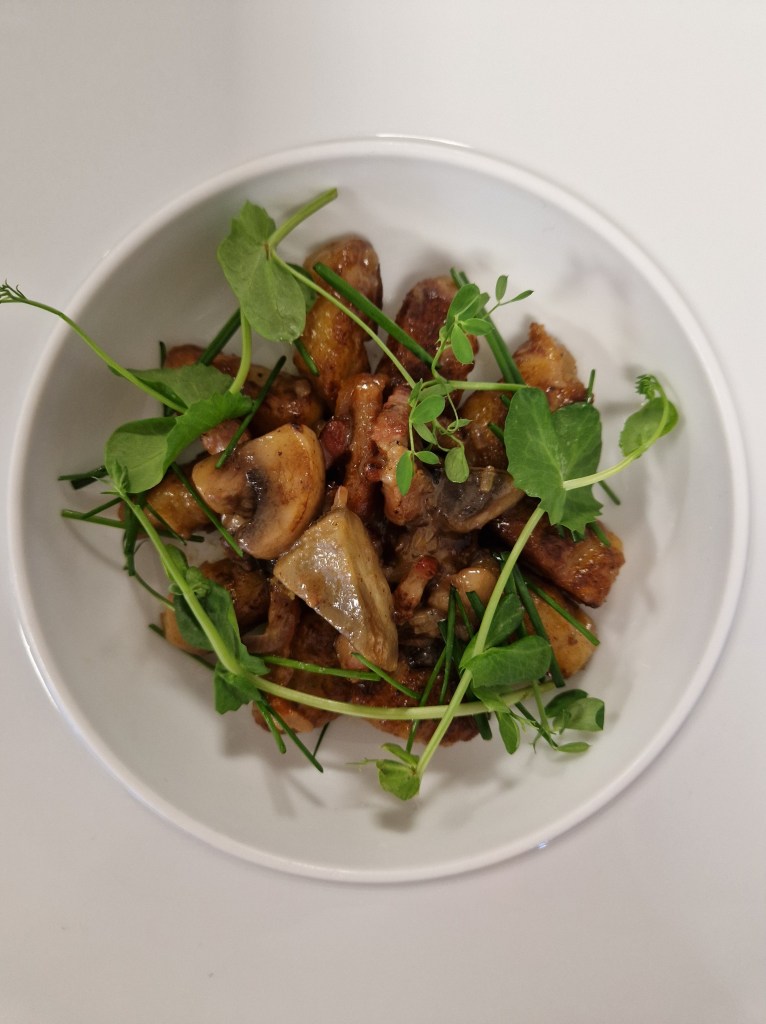
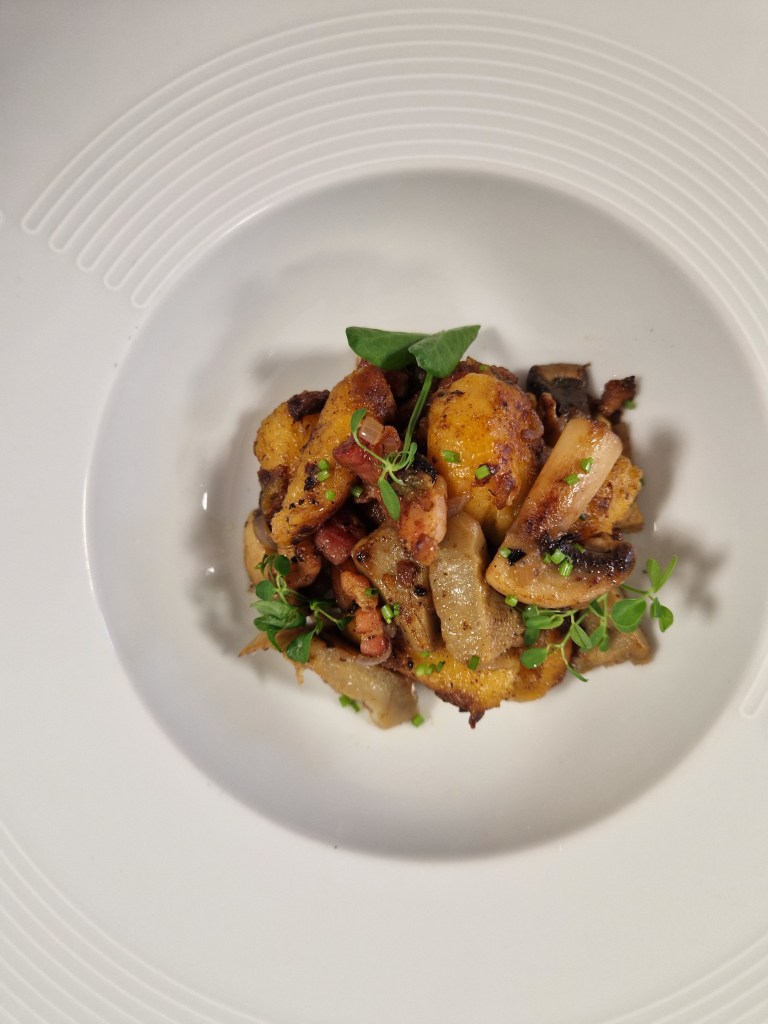
Then on to the wine lesson where we covered white wine production and tasted two local whites before I came top of the class in the scent identification game—but only as A. was absent ill today.
 Food in Provence (and elsewhere)
Leave a comment